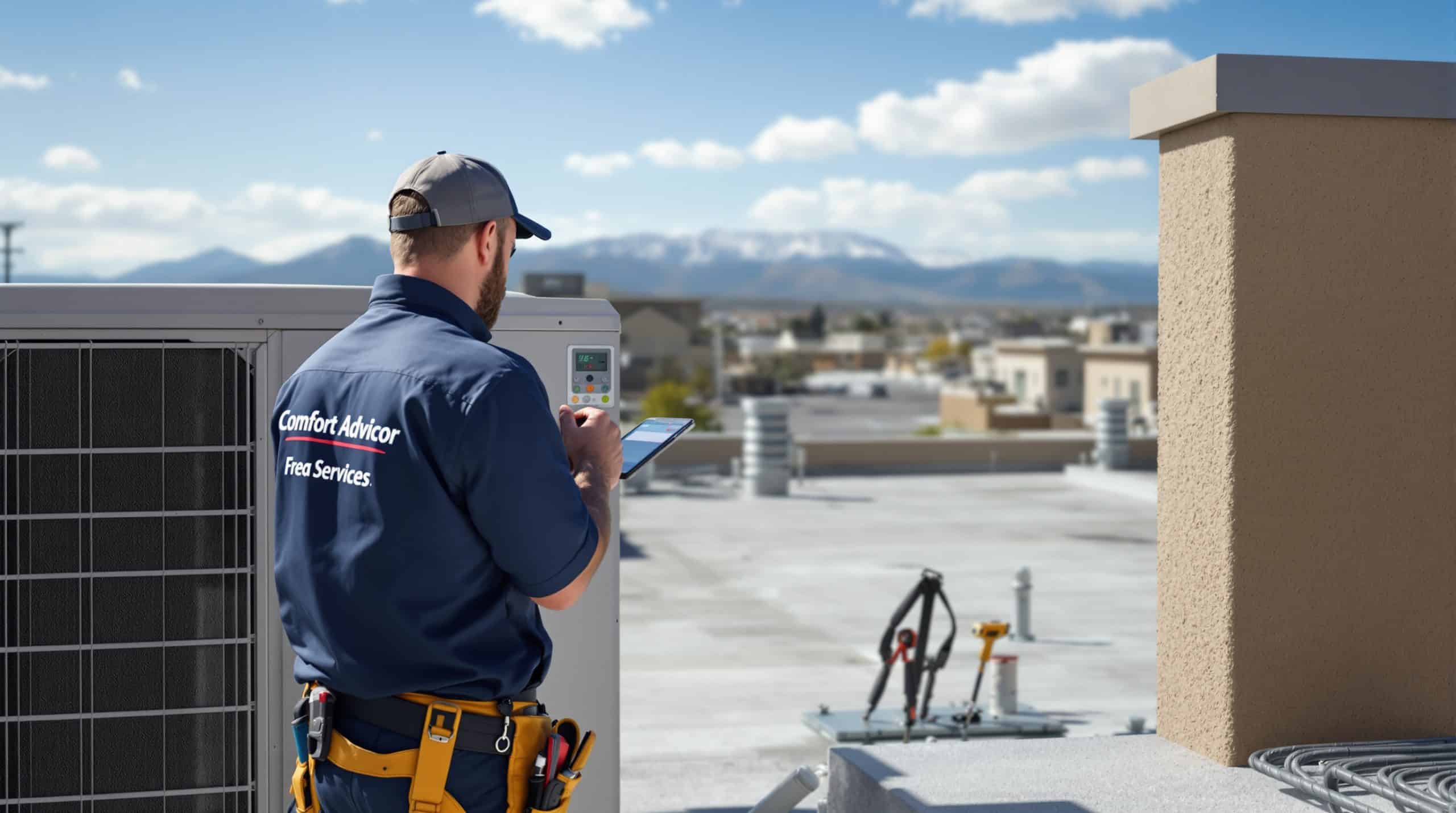
A tenant calls the front office at 4:45 on a Friday because the storefront next to the coffee shop on North Tejon just lost cooling, and the property manager is now the one fielding the complaint. The rooftop unit that has quietly run for a decade finally gave out during a September heat spike, and nobody scheduled a maintenance visit since spring. It is a familiar scene for anyone managing small commercial buildings in El Paso County, where altitude, weather swings, and tight maintenance budgets collide.
Key Takeaways
- Proactive maintenance protects revenue: A single unplanned rooftop unit failure can cost more in tenant frustration and vacancy risk than a year of scheduled visits.
- Altitude changes the math: Colorado Springs sits at 6,035 feet, which affects combustion efficiency, refrigerant charge, and equipment sizing for commercial systems just as it does for homes.
- Rooftop units have predictable failure points: Most breakdowns trace back to a handful of recurring issues that a trained comfort advisor can catch during a routine visit.
- Tenant complaints are a lagging indicator: By the time tenants call about comfort issues, the underlying problem has usually existed for weeks or months.
- Licensed technicians matter for liability and documentation: Property managers need a paper trail of who serviced the equipment, what was checked, and what was found.
- Flexible scheduling reduces disruption: Maintenance windows that work around business hours keep tenants comfortable without shutting down operations.
1. Why Proactive Maintenance Matters for Small Commercial Properties
Commercial HVAC equipment works harder than most people realize. A rooftop unit on a small retail strip or professional office building runs longer hours, cycles more often, and faces more thermal stress than a typical residential system. When that equipment is left to run without scheduled attention, small inefficiencies compound quietly until they surface as a full breakdown, usually at the worst possible time.
For property managers and small business owners, the math is straightforward even without diving into cost figures. A neglected system loses efficiency gradually, which shows up as higher utility bills long before it shows up as a failure. Then, when a component finally gives out, the interruption affects everyone downstream: tenants who cannot open their doors comfortably, employees working in a stuffy office, and a property manager who has to explain the gap to ownership. Preventive maintenance exists to catch the small failures before they become the big one.
The Connection Between Maintenance and Property Value
Commercial tenants and buyers alike look at building systems as part of overall property condition. A well-documented maintenance history signals that a building has been cared for, which matters during lease renewals, insurance reviews, and eventual resale. Skipping maintenance to save a line item in the budget often costs more later in emergency repairs, tenant turnover, and equipment replaced years before its expected service life ends.
Altitude as a Hidden Variable
Colorado Springs' elevation affects commercial HVAC performance in ways that are easy to overlook if a maintenance provider is not familiar with high-altitude equipment behavior. Thinner air changes combustion efficiency in gas-fired rooftop units and affects how refrigerant systems perform under load. A technician who only services equipment at sea level may not catch a combustion adjustment or airflow issue that is specific to elevation, which is why local, altitude-aware expertise matters for commercial buildings just as much as it does for homes.
2. Common Rooftop Unit Issues in Colorado Springs Businesses
Rooftop units, often called RTUs, are the workhorses of light commercial HVAC in Colorado Springs. They sit exposed to intense sun, sudden hailstorms, high wind, and wide temperature swings between morning and afternoon. That exposure creates a predictable set of failure patterns that show up again and again across strip malls, small offices, and mixed-use buildings throughout the region.
Dirty condenser coils are one of the most common issues, especially on properties near Powers Boulevard or other high-traffic corridors where dust and debris accumulate quickly. Refrigerant leaks are another frequent problem, often developing slowly at a joint or coil until the system loses enough charge to struggle with cooling demand. Electrical connections loosen over time from the vibration of daily cycling, and control boards can fail after years of temperature extremes on an exposed rooftop.
Weather-Driven Wear and Tear
Hailstorms are a real threat to rooftop equipment in this region, and even a storm that does not visibly dent the cabinet can bend fins on a condenser coil enough to reduce airflow. Freeze-thaw cycles through the winter months stress cabinet seals and can allow moisture intrusion that corrodes internal components. A maintenance visit after a significant storm event, not just on a calendar schedule, catches damage before it becomes a mid-summer emergency.
Airflow and Duct Performance Problems
Many light commercial buildings in Colorado Springs, particularly older strip centers and converted spaces, have ductwork that was never properly sealed. Leaky supply and return ducts force the rooftop unit to work harder to maintain temperature, which shows up as uneven comfort between units in the same building and higher utility costs across the board. Duct sealing technology such as Aeroseal can address this without tearing into finished ceilings or walls, sealing leaks from the inside and restoring the airflow the system was designed to deliver.
3. How Neglected Maintenance Leads to Tenant Complaints and Downtime
Tenant complaints rarely appear out of nowhere. They are almost always the visible end result of a problem that has been building for weeks or months without anyone catching it. A slow refrigerant leak does not announce itself until the system can no longer keep up on a hot afternoon. A clogged filter does not cause a shutdown immediately, but it steadily reduces airflow until the compressor overworks and trips a safety switch.
For a property manager, this pattern means that tenant complaints are a lagging indicator, not a leading one. By the time a tenant calls to report that their space is too warm or too cold, the underlying issue has usually existed long enough to reduce system efficiency and shorten equipment life. Waiting for complaints to trigger service visits means the property is always reacting instead of preventing.
The Real Cost of Downtime for Small Businesses
A retail tenant losing cooling during business hours faces lost sales and frustrated customers. An office tenant dealing with poor temperature control sees reduced productivity and employee complaints. For the property manager, repeated downtime events damage the landlord-tenant relationship and can influence lease renewal decisions, regardless of who technically holds responsibility for the equipment under the lease terms.
Documentation Protects Everyone
One underappreciated benefit of scheduled maintenance is the paper trail it creates. When a tenant disputes responsibility for a comfort issue, or when an insurance question arises after equipment failure, having a documented maintenance history from a licensed provider protects the property owner. It shows that reasonable care was taken and gives a clear record of when issues were identified and addressed, which matters far more than most property managers realize until they need it.
4. What a Licensed Commercial HVAC Maintenance Visit Includes
A maintenance visit that actually protects a commercial property goes well beyond a quick filter swap. Licensed comfort advisors follow a structured process designed to catch developing problems while they are still inexpensive to fix, and to document the condition of the equipment for the property's records.
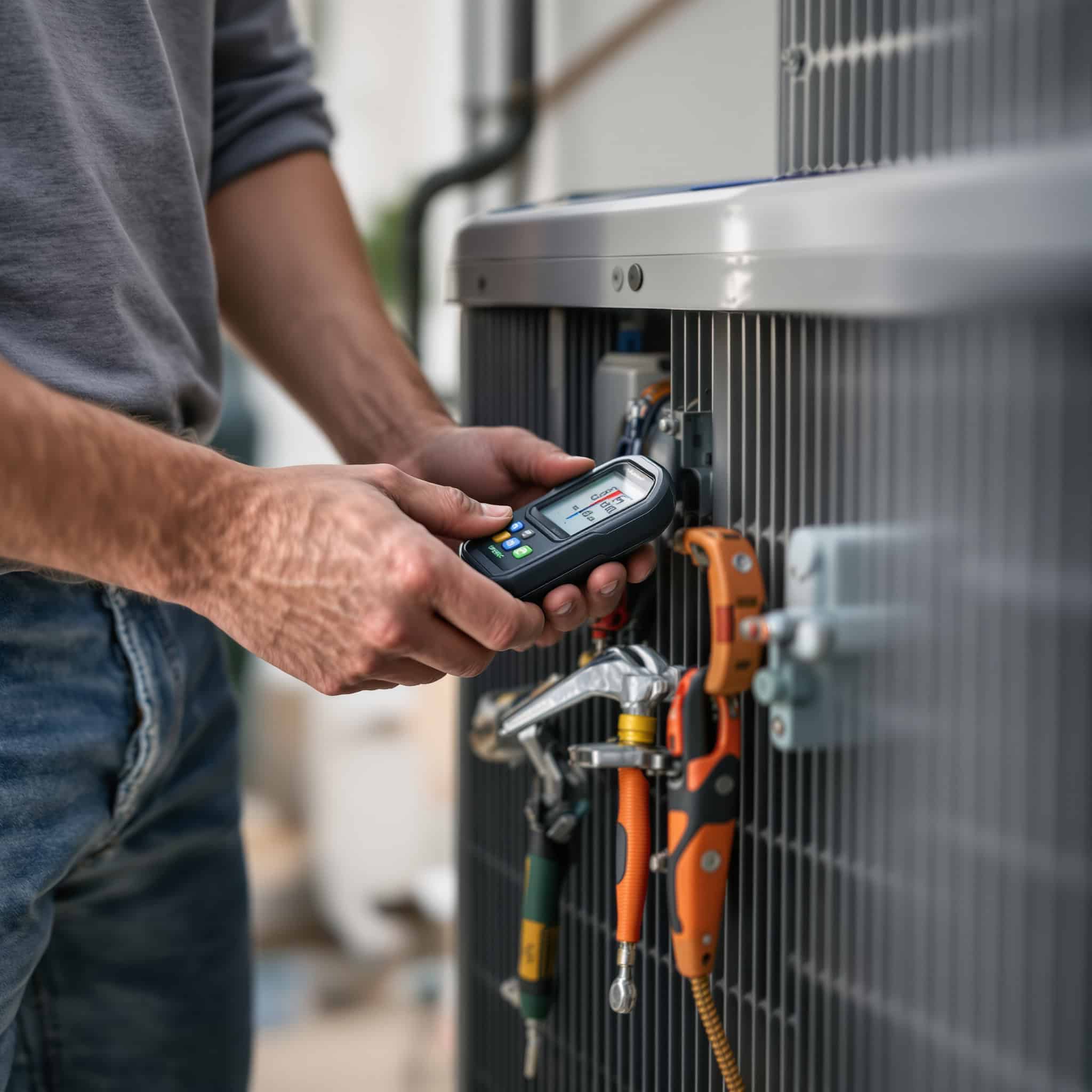
A thorough visit typically includes inspecting and cleaning condenser and evaporator coils, checking refrigerant charge against manufacturer specifications, testing electrical connections and control board function, and verifying that safety switches and thermostats are operating correctly. Combustion analysis on gas-fired units confirms that the system is burning cleanly at Colorado Springs' elevation, which matters both for efficiency and for carbon monoxide safety. Airflow measurements identify whether ductwork or filtration is restricting the system's ability to deliver conditioned air where it is needed.
| What's Checked | Why It Matters |
|---|---|
| Condenser and evaporator coils | Dirty coils reduce heat exchange efficiency and increase compressor strain |
| Refrigerant charge | Low or high charge causes poor cooling and long-term compressor damage |
| Electrical connections | Loose connections from vibration are a leading cause of control failures |
| Combustion performance | Altitude affects burn efficiency and carbon monoxide risk in gas units |
| Airflow and ductwork | Leaky or restricted ducts force the system to overwork and waste energy |
| Filters and belts | Worn components reduce airflow and accelerate equipment wear |
This kind of documented, standardized visit is what separates a maintenance program from a reactive service call. It gives property managers a clear written record of system condition and a chance to plan for repairs or replacements on their own timeline instead of during an emergency.
Refrigerant Transition Awareness
The HVAC industry is in the middle of a refrigerant transition, with newer equipment moving toward R-454B and other lower-impact refrigerants under EPA guidance. A licensed maintenance provider should understand which refrigerant a given rooftop unit uses, how to service it safely, and what that means for a property manager weighing repair against replacement on an aging unit.
Sizing and Efficiency at Altitude
Commercial equipment sized without accounting for Colorado Springs' elevation often runs less efficiently than it should. Air density affects both airflow and combustion, which is why equipment selection and adjustment matter as much for a small office building as for a house. Reference points from ENERGY STAR and the Department of Energy help establish efficiency baselines, but the final adjustment for altitude requires a technician who works in this specific climate regularly.
5. Why Property Managers Value Licensed, Certified Technicians
Property managers juggle multiple vendors, tight budgets, and tenant expectations every day, and HVAC service is one of the few building systems where a mistake can be both expensive and immediately visible to tenants. That is why licensing and certification matter more in commercial HVAC than almost any other service category on a property manager's vendor list.
A & Z Mechanical's technicians hold Colorado Mechanical A License No. MA050286, which means they have passed an industry-recognized standard for diagnostic and repair competency. As an Armstrong Air Authorized Dealer, the team also has direct access to manufacturer documentation, warranty support, and parts availability that keep repair timelines predictable. For a property manager coordinating tenant expectations around a repair window, that predictability is worth more than a lower quote from an unfamiliar vendor.
A Handshake You Can Trust, Backed by History
A & Z Mechanical has served Colorado Springs since 2001, and that more than 25 years of local history means the company has built maintenance relationships with property managers across the region, from downtown office buildings to small retail centers in Fountain, Falcon, and Monument. The company's BBB A+ rating, held for over 20 years, reflects a consistent pattern of straight answers and honest diagnostics. Comfort advisors are trained to diagnose the actual problem, not find one, which removes the incentive to recommend a repair or replacement that is not actually needed.
Accountability Property Managers Can Document
Every visit comes with clear documentation of what was inspected, what was found, and what was recommended, and a team that stands by the work. For a property manager who has to justify maintenance spending to ownership or explain a repair decision to a tenant, that documentation is not just a nice-to-have. It is the record that makes an honest diagnostic process defensible and repeatable across every property in a portfolio.
6. Seasonal Maintenance Timing for Colorado Springs Commercial Properties
Colorado Springs' climate does not follow a simple two-season maintenance calendar. The Front Range sees warm, sunny days in the middle of winter and can drop into freezing temperatures overnight even in late spring, which means commercial HVAC equipment faces demand shifts that a fixed maintenance schedule elsewhere in the country would not anticipate. Property managers who plan maintenance visits around actual seasonal patterns in this region get more value from each visit than those who simply schedule twice a year on a generic calendar.
Spring visits, ideally completed before the first real heat wave arrives, focus on cooling-system readiness: coil cleaning, refrigerant checks, and airflow verification ahead of the season when tenants are least tolerant of comfort problems. Fall visits shift focus to combustion safety and heating readiness, since gas-fired rooftop units need combustion analysis before the heating season begins in earnest. Properties in higher-elevation communities like Woodland Park or Black Forest may see earlier cold snaps than Colorado Springs proper, which is worth factoring into scheduling for portfolios that span multiple communities.
Wildfire Season and Air Intake Considerations
Summer wildfire smoke is a recurring regional concern, and it affects commercial buildings through outdoor air intakes just as it affects residential homes. A maintenance visit during smoke season should include a check of filtration on any unit with outside air intake, since standard filters may not be adequate during heavy smoke events. Reviewing AirNow air quality data alongside a building's ventilation setup helps property managers decide whether temporary filtration upgrades are worth considering for tenant comfort and health.
Storm-Triggered Inspections
Beyond the regular seasonal calendar, a post-storm inspection after significant hail or high wind events is worth building into a maintenance program. Rooftop equipment takes the brunt of severe weather in this region, and catching coil damage or loose panel seals immediately after a storm prevents a small issue from becoming a mid-summer breakdown weeks later when the damage has had time to worsen.
7. Choosing a Maintenance Plan That Fits Your Property
Not every small commercial property needs the same maintenance approach. A single-tenant office building with one rooftop unit has different needs than a multi-tenant retail strip with several units serving different lease spaces, and a maintenance plan should reflect that difference rather than applying a one-size-fits-all schedule across every property in a portfolio.
The right starting point is an honest conversation about the building's equipment age, tenant mix, and how much tolerance exists for unplanned downtime. Older equipment nearing the end of its expected service life benefits from more frequent check-ins, since components are more likely to show early signs of wear that a technician can catch before failure. Newer equipment under warranty may need less frequent visits but still requires documented maintenance to keep that warranty valid, since most manufacturers, including Armstrong Air, require proof of regular service.
Questions Worth Asking Before Committing to a Plan
Property managers evaluating a maintenance provider should ask how visits are scheduled around tenant business hours, whether emergency service is included or billed separately, and how findings are documented and shared. A provider that cannot answer these questions clearly, or that pushes toward the most expensive plan without explaining the reasoning, is worth reconsidering. Straight answers about what a property actually needs, rather than what generates the most revenue for the contractor, are the foundation of a maintenance relationship that lasts.
FAQs
Does A & Z Mechanical offer service contracts for light commercial properties?
Yes, A & Z Mechanical works with property managers and small business owners to set up maintenance schedules tailored to their equipment and tenant needs. Contact the team to discuss a plan that fits your property's specific rooftop units and usage patterns.
How fast is emergency HVAC response for commercial properties in Colorado Springs?
A & Z Mechanical offers 24/7 emergency service for urgent HVAC failures. A true emergency generally means a total loss of heating or cooling that affects tenant safety or business operations, and calls of that nature are prioritized accordingly.
Is a commercial HVAC maintenance plan actually worth the ongoing cost?
For most light commercial properties, yes. Scheduled maintenance catches small issues, like a developing refrigerant leak or a dirty coil, before they cause a breakdown that disrupts tenants and costs more to repair on an emergency basis.
Can maintenance visits be scheduled outside normal business hours to avoid disrupting tenants?
Yes, A & Z Mechanical works with property managers to schedule visits around tenant business hours whenever possible. Flexible scheduling is part of building a maintenance relationship that respects how a commercial property actually operates.
What size or type of commercial properties does A & Z Mechanical service?
A & Z Mechanical focuses on light commercial properties, including small offices, retail spaces, and mixed-use buildings across Colorado Springs and surrounding communities like Monument, Fountain, and Falcon. Contact the team directly to confirm fit for a specific property's equipment and scope.
Conclusion
Light commercial HVAC in Colorado Springs runs on a different set of pressures than residential systems: harder duty cycles, rooftop exposure to hail and wind, tenant expectations that leave little room for downtime, and an altitude that changes how equipment should be sized, adjusted, and maintained. Property managers who treat maintenance as a scheduled, documented process rather than a reactive scramble protect both their tenants' comfort and their property's long-term value. The patterns are predictable: neglected coils, slow refrigerant leaks, leaky ductwork, and storm damage that goes unnoticed until it becomes a full system failure.
A & Z Mechanical has served Colorado Springs since 2001 with the same small-town ethics the company was built on, bringing Colorado Mechanical A License No. MA050286 and Armstrong Air Authorized Dealer standing to light commercial properties across El Paso County. Honest diagnostics and upfront documentation give property managers exactly what they need: a clear picture of equipment condition and straight answers about what a building actually requires, without pressure toward unnecessary work.
Get A Quote to schedule a light commercial HVAC maintenance visit for your property, or to set up an ongoing plan that keeps rooftop units running reliably through every Colorado Springs season.