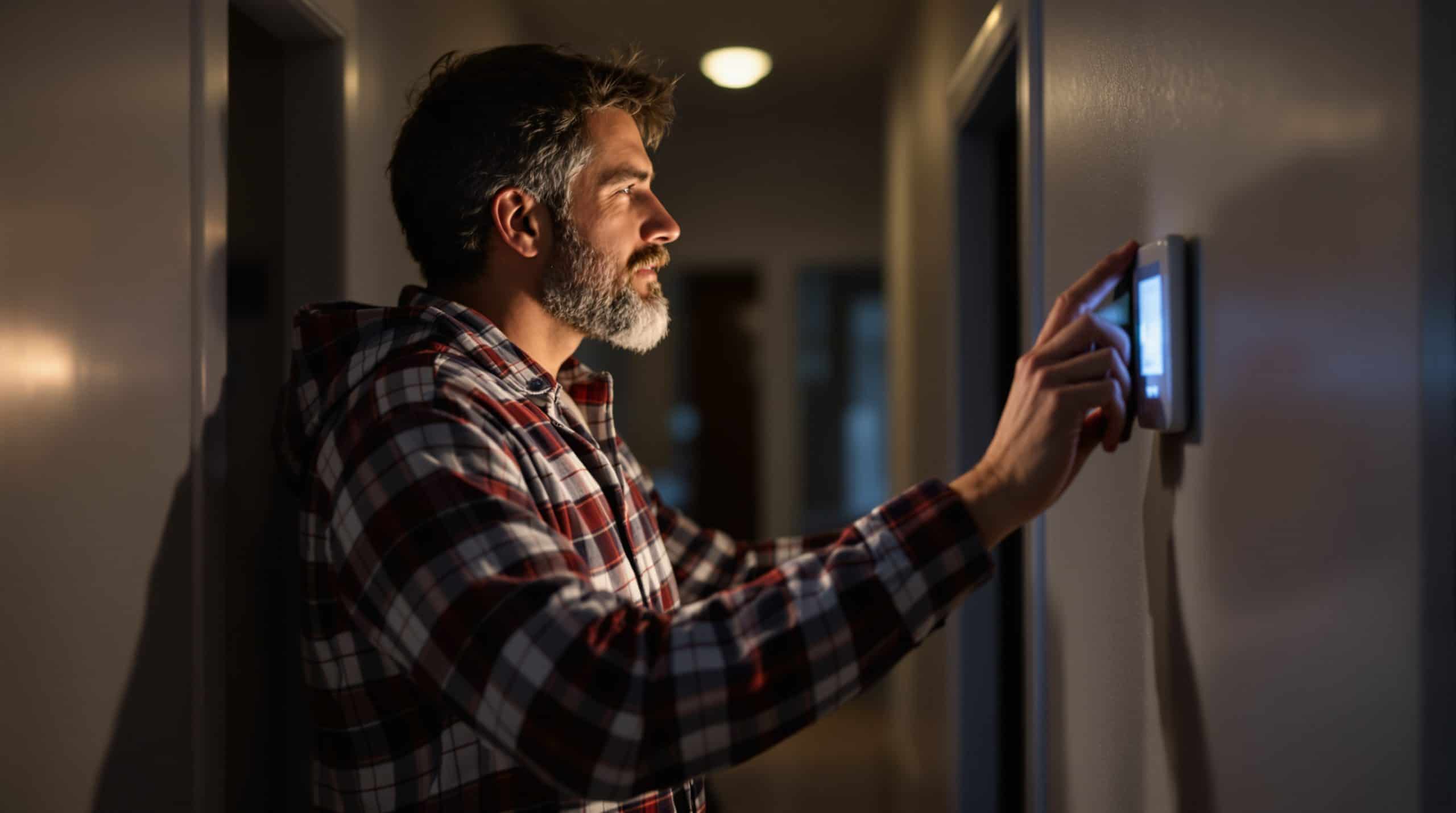
It's 11 p.m. on a January night, the furnace has gone quiet, and the thermostat is sliding toward 55 degrees while your kids are asleep down the hall. You're standing in the hallway in your socks, phone in hand, trying to decide if this is a real emergency or something that can wait until morning. That decision, and what happens in the hour after you make it, is what this guide is about.
Key Takeaways
- Not every breakdown is an emergency: No heat in freezing temperatures, gas smells, and carbon monoxide alarms qualify; a noisy blower usually doesn't.
- Response time matters more than promises: A real 24/7 service should have a live comfort advisor on the phone, not a voicemail, and a clear arrival window.
- Honest diagnostics don't disappear under pressure: A trustworthy contractor still explains the problem and the fix, even at 2 a.m.
- Some steps while you wait actually help: Shutting off a leaking system or clearing vents can prevent damage before help arrives.
- A & Z Mechanical answers after hours, every day: Family Operated since 2001, with 24/7 emergency service and a team that stands by every call.
1. What Actually Counts as an HVAC Emergency
Homeowners often assume any HVAC failure is an emergency, and that's understandable when a house feels cold or an alarm is beeping somewhere in the dark. But a true HVAC emergency is one where waiting creates a health, safety, or property risk, not just discomfort. Sorting the two apart quickly saves you money on unnecessary after-hours dispatch and helps the comfort advisor triage your call correctly when you do need one.
At Colorado Springs elevation, cold snaps arrive fast and hard, and a furnace failure in single-digit temperatures behaves differently than the same failure in October. Pipes can freeze within hours in an unheated home during a hard winter storm, and elderly residents or young children are at real risk from prolonged cold exposure. On the cooling side, a full AC failure during a rare 95-degree August heat wave is less life-threatening but still urgent for medically fragile household members.
No Heat in Freezing Temperatures
If your furnace stops working and the outdoor temperature is at or below freezing, this is the clearest emergency scenario. Indoor temperatures can drop into unsafe territory within several hours, especially in older, less insulated homes common in the Old North End or Manitou Springs. This is also when frozen pipe risk becomes real, since Colorado Springs winters routinely bring stretches of sustained sub-freezing weather.
Gas Smells or Suspected Leaks
Any smell of gas near your furnace or water heater is always an emergency, full stop. Leave the house immediately, do not flip light switches or use anything that could spark, and call your gas utility's emergency line before calling an HVAC contractor. Once you're safely away from the property, a comfort advisor can help coordinate next steps.
Carbon Monoxide Alarms
A sounding carbon monoxide detector means you evacuate first and ask questions later. Carbon monoxide is colorless and odorless, and combustion appliances at altitude can produce it at higher rates if venting or air-fuel mixtures are off, which is one reason carbon monoxide safety checks are a standard part of furnace tune-ups in this market. Do not re-enter the home until the alarm stops and you've had the system inspected.
2. How Fast a 24/7 Comfort Advisor Should Respond
Advertising "24/7 emergency service" is easy. Actually delivering a live person, a clear timeline, and a technician who shows up when promised is a different standard, and it's the one that matters when your house is losing heat overnight. When you're evaluating any HVAC company's emergency claims, whether that's the night of an actual breakdown or while researching ahead of time, look past the marketing language and ask what specifically happens when you dial the after-hours line.
A well-run emergency line answers with a real human, not a maze of automated menus that eventually dumps you into voicemail. That person should ask a handful of direct questions: what's the symptom, is anyone in the home in immediate danger, what's the current indoor temperature, and what's the make and age of your system. From there, they should give you an honest arrival window rather than a vague "someone will call you back."
What a Real Response Timeline Looks Like
A dependable emergency HVAC response follows a predictable rhythm even under pressure. Here's what that generally looks like from the moment you call to the moment a comfort advisor is at your door.
| Stage | What Should Happen |
|---|---|
| Initial call | Live answer, not automated voicemail, within a few rings |
| Triage | Comfort advisor asks safety and system questions to confirm true emergency status |
| Dispatch | You're given a realistic arrival window, not an open-ended "sometime tonight" |
| En route update | A call or text if the technician is running early or late |
| On-site arrival | Comfort advisor diagnoses before recommending any repair |
Why After Hours Staffing Structure Matters
Some HVAC companies route overnight calls to a third-party answering service with no local knowledge or altitude expertise, which creates pressure toward guesswork rather than an accurate fix. A & Z Mechanical's comfort advisors are trained specifically for Colorado Springs altitude and accountable for getting the diagnosis right, which removes the incentive to recommend more than your system actually needs, even during an after-hours call when you're least equipped to push back.
3. What Happens During an After Hours Service Call
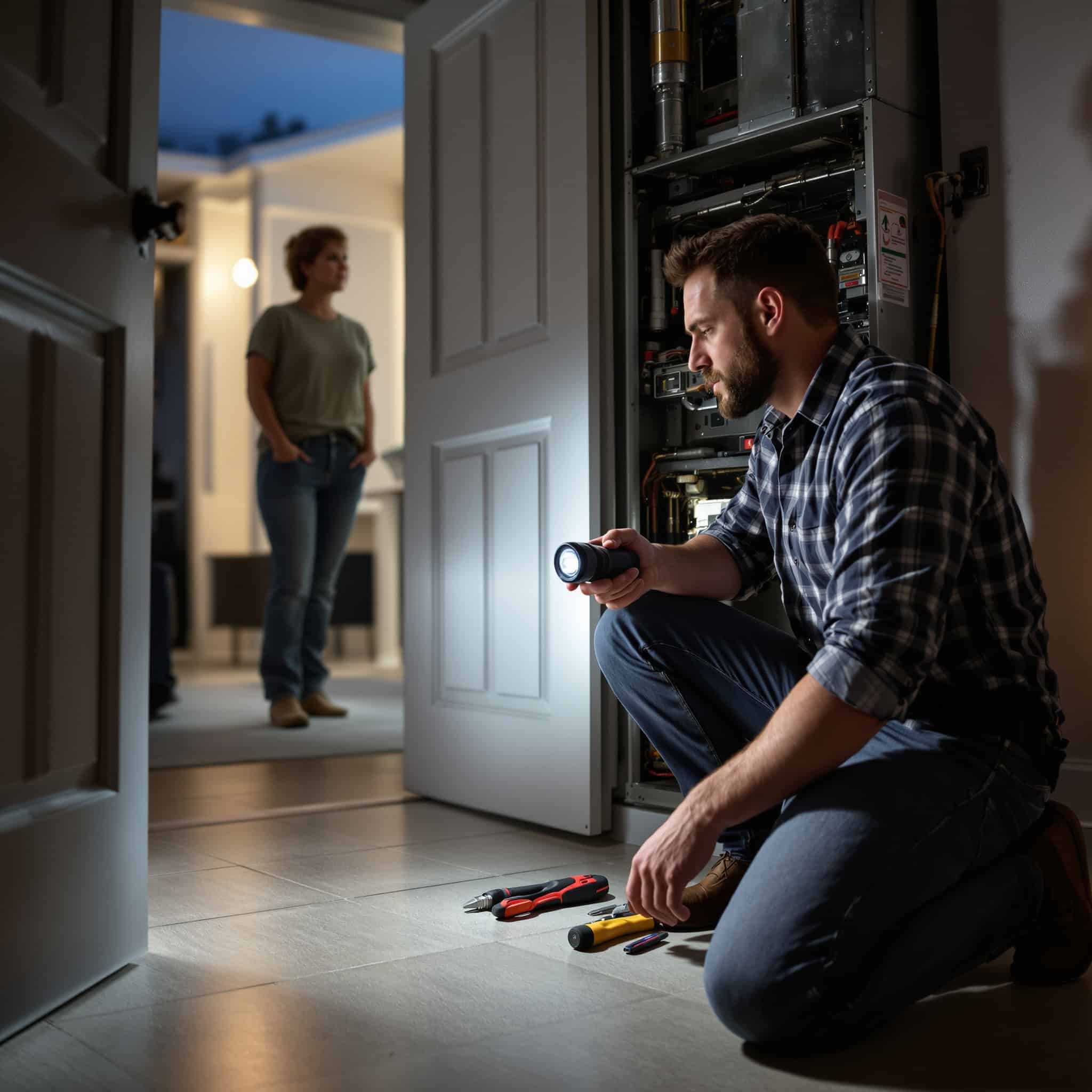
Once a comfort advisor arrives at your home late at night, the visit should follow the same disciplined process as a daytime call, just compressed and under more pressure. That consistency is a good sign that you're dealing with a company built on real training rather than one that treats emergency calls as a chance to move fast and skip steps. You should expect an introduction, a walkthrough of the symptom, and a hands-on inspection before any talk of repair or replacement.
The technician will typically check the thermostat settings first, since a surprising number of "no heat" or "no cool" calls trace back to a dead thermostat battery or an accidental setting change rather than equipment failure. From there they'll move to the equipment itself, checking power, safety switches, ignition or compressor function, and airflow. In a true emergency, this diagnostic phase moves quickly, but it doesn't disappear, because skipping it is how homeowners end up paying for parts that were never the problem.
Diagnosis Before Any Repair Talk
A comfort advisor should walk you through what they found in plain language before quoting any repair. This includes showing you the failed component when possible, explaining why it failed, and outlining your options, whether that's a straightforward part replacement or a temporary fix to get you through the night with a full repair scheduled during regular hours. You should never feel pressured to approve a major repair on the spot without understanding what's actually broken.
Temporary Fixes Versus Permanent Repairs
Sometimes the safest overnight solution isn't the final one. A comfort advisor might get your furnace running again with a part on the truck, then recommend scheduling a return visit during the day to address a secondary issue, order a specific part, or perform a fuller inspection once there's daylight and time to be thorough. This is normal and honest, not a sign of an incomplete job, and it should always be explained clearly rather than left as a surprise on your invoice.
Upfront Pricing Even at Midnight
Upfront pricing shouldn't change because it's 2 a.m. You should receive a clear price before work begins, not an estimate that shifts after the job is done. If a company can't give you a firm number before starting a repair, that's a signal to ask more questions, emergency or not.
4. Situations That Can Usually Wait Until Regular Hours
Not every HVAC hiccup justifies an after-hours dispatch fee, and knowing the difference protects your budget without putting your household at risk. The general rule is simple: if the issue is uncomfortable but not dangerous, and your home can maintain a safe temperature overnight, it can usually wait for a scheduled daytime appointment.
A furnace that's noisier than usual but still heating, a thermostat display that's acting glitchy while the system still runs, or an AC unit that's cooling less effectively than it did last summer are all inconvenient but rarely urgent. Similarly, if one room in the house is colder or warmer than the rest but the overall system is functioning, that's a comfort issue worth addressing, not a middle-of-the-night crisis. This is a common situation in older homes with uneven ductwork, and it's often better diagnosed in daylight anyway, since airflow and duct issues are easier to trace when a technician can fully access the attic or crawlspace.
When Discomfort Isn't Danger
A house running a few degrees warmer or cooler than the thermostat setting overnight is uncomfortable, not hazardous, especially in shoulder-season months like April or October when outdoor temperatures aren't extreme. If your system is still producing some heat or cool air, even imperfectly, you likely have room to wait for a morning appointment rather than paying an emergency rate. The exception is any household with infants, elderly residents, or family members with health conditions sensitive to temperature swings, where a lower threshold for calling makes sense.
Cosmetic and Minor Performance Issues
Rattling ductwork, a faint odor when the system first kicks on for the season, or a slightly delayed startup are all worth mentioning to your comfort advisor at your next scheduled visit rather than triggering an emergency call. These issues are worth tracking, since a pattern of small symptoms sometimes points to a bigger one, but on their own they rarely represent an urgent risk to your home or family.
5. How Honest Diagnostics Work Even Under Time Pressure
The environment of an emergency call, a homeowner who's stressed, tired, and worried about their family staying warm, is exactly the environment where unnecessary upselling tends to thrive. A technician looking to pad the invoice has every incentive to recommend the most expensive fix at the moment you're least likely to ask questions. This isn't about painting every HVAC company as dishonest; it's about understanding the structural pressure that exists in the industry and knowing what an honest process looks like so you can recognize it.
Honest diagnostics under time pressure still follow a sequence. The comfort advisor identifies the actual failed component, explains what caused it, and connects the repair directly to the symptom you called about. If a technician recommends replacing your entire system during an emergency call for a single failed part, that's worth a second opinion, not an immediate yes. A repair should solve the problem in front of you, not open into an unrelated sales conversation about a new unit, financing, or an extended warranty you didn't ask about.
What Honest Diagnostics Should Sound Like
An honest comfort advisor explains findings in terms you can verify, even if you don't know HVAC systems yourself. Phrases like "your igniter failed, here's the part, here's why it's the cause of your no-heat symptom" are the standard to expect. Vague language like "the whole system is at risk" or pressure to sign a same-night financing agreement for a full replacement, without a clear technical explanation, is a signal to slow down and ask for specifics.
Why Honest Diagnostics Change the Incentive
A & Z Mechanical's technicians are trained to diagnose the actual problem before recommending a fix, which means there's no reward for recommending more work than your system needs, whether it's noon on a Tuesday or 3 a.m. on a Saturday. That approach is built to keep the focus on getting the diagnosis right the first time rather than maximizing the invoice.
Getting a Second Opinion When Something Feels Off
If a recommendation during an emergency call feels disproportionate to the symptom, it's reasonable to ask the comfort advisor to walk you through the reasoning again, or to request a temporary fix while you get a second opinion during business hours. A company confident in its diagnosis will welcome that conversation rather than rush you past it.
6. What to Do While You Wait for Help to Arrive
The time between placing your emergency call and the comfort advisor's arrival isn't wasted time. A few simple, safe steps can prevent additional damage, keep your household more comfortable, and give the technician useful information the moment they walk in the door. None of these require technical skill, just a clear head and a few minutes.
Start by locating your thermostat's current reading and any error codes or blinking lights on the furnace or air handler itself, since this information speeds up diagnosis considerably. If you smell gas or suspect a carbon monoxide issue, none of the steps below apply; leave the home immediately and call from a safe location instead. For everything else, a short mental checklist helps you use the waiting period productively.
Immediate Safety Steps
If water is visibly leaking from an indoor unit or a furnace, shutting off the water supply to that component (if you know how) and placing towels or a shallow container underneath can limit damage to flooring and drywall. If you hear a burning smell or see any smoke, turn off the system at the breaker and do not attempt to restart it, and mention this immediately when the comfort advisor calls to confirm arrival.
Keeping the Household Comfortable
While waiting for a no-heat call in winter, close doors to unused rooms to concentrate warmth in occupied spaces, and use extra blankets or layered clothing rather than space heaters left unattended overnight. For a summer AC failure, closing blinds and curtains reduces solar heat gain, and running ceiling fans (which use far less energy than the AC unit) helps circulate any cooler air that remains in the house.
Information to Have Ready
Before the technician arrives, jot down when the problem started, whether it happened suddenly or gradually, and any unusual sounds or smells you noticed beforehand. Having your system's approximate age and, if available, the brand or model visible on the unit's nameplate, helps the comfort advisor arrive with a better sense of what parts might be needed, which can shorten the repair time significantly.
7. How to Reach A and Z Mechanical After Hours
Knowing who to call before the emergency happens is one of the simplest things a Colorado Springs homeowner can do to reduce stress later. A & Z Mechanical has served El Paso County since 2001 as a family operated, HVAC-focused company, which means every comfort advisor who answers an overnight call is trained specifically on heating and cooling systems rather than splitting attention across plumbing or electrical work. That focus matters most in the moments when you need a fast, accurate diagnosis rather than a generalist's best guess.
Save the company's after-hours contact number in your phone now, before a January cold snap or an August heat wave makes the search harder than it needs to be. A & Z's 24/7 emergency service line connects you to a real comfort advisor, not a call center reading from a script with no local knowledge of Colorado Springs winters or the way altitude affects furnace performance. The company's BBB A+ rating, held for more than two decades, and its status as an Armstrong Air Authorized Dealer reflect a long track record of the kind of accountability that matters most when you're calling in a moment of genuine need.
What to Have Ready Before You Call
Have your address, a brief description of the symptom, and any safety concerns ready when you dial. If you're a military family stationed at Fort Carson, Peterson Space Force Base, Schriever Space Force Base, Cheyenne Mountain Space Force Station, or the Air Force Academy, mention it; A & Z's 10% military discount applies to service calls, and comfort advisors are used to working around PCS timelines and base housing considerations.
Serving Colorado Springs and Surrounding Communities
A & Z's after-hours service extends beyond the city core to Monument, Fountain, Falcon, Black Forest, Woodland Park, Manitou Springs, and Peyton. Response times can vary slightly by distance from the shop, but the same diagnostic standards and upfront pricing apply no matter which of these communities you're calling from.
FAQs
How fast does emergency HVAC service respond in Colorado Springs?
Response times vary by company and by how far you are from their dispatch area, but a well-run 24/7 line should answer live, give you a realistic arrival window immediately, and update you if that window changes. Communities farther from central Colorado Springs, like Peyton or Woodland Park, may see slightly longer windows than in-town calls.
What counts as an HVAC emergency versus something that can wait?
No heat during freezing temperatures, gas smells, carbon monoxide alarms, and visible flooding from indoor equipment are true emergencies. A noisy but functioning system, uneven room temperatures, or minor performance loss can typically wait for a scheduled daytime appointment.
Will I be charged more for an after-hours HVAC call?
Most companies apply a different rate structure for after-hours or emergency dispatch compared to scheduled daytime visits, since it involves calling a technician in outside normal hours. Ask for upfront pricing before work begins so you know the cost before any repair is approved.
How do I know if a technician is upselling me during an emergency call?
Watch for vague language, pressure to approve a full system replacement for a single failed part, or same-night financing pushes without a clear technical explanation. An honest comfort advisor connects the recommended repair directly to the symptom and shows you the failed component when possible.
Should I turn off my HVAC system while waiting for emergency service?
If you smell gas, see smoke, or notice water leaking from an indoor unit, shut the system off at the breaker and wait outside or in a safe part of the home. For a simple no-heat or no-cool symptom with no visible danger, it's generally fine to leave the system as is until the comfort advisor arrives.
Conclusion
Knowing what qualifies as a true HVAC emergency, what a fast and honest response looks like, and what you can safely do while you wait takes most of the panic out of a system failure at the worst possible time. Colorado Springs winters and summers don't leave much margin for guesswork, and understanding this process ahead of time means you'll make clearer decisions the night your furnace or AC actually fails.
A & Z Mechanical has built its reputation in Colorado Springs on the same small-town ethics since 2001, whether that's a routine tune-up in October or a 2 a.m. call during a hard freeze. As an Armstrong Air Authorized Dealer with comfort advisors trained to diagnose honestly at any hour, the company's approach doesn't change based on the clock.
Get A Quote to talk with a comfort advisor about your system before an emergency happens, or to get straight answers the moment one does. Whether it's a furnace that won't start on a freezing night or an AC unit struggling through an August heat wave, you'll get honest diagnostics and upfront pricing every time you call.