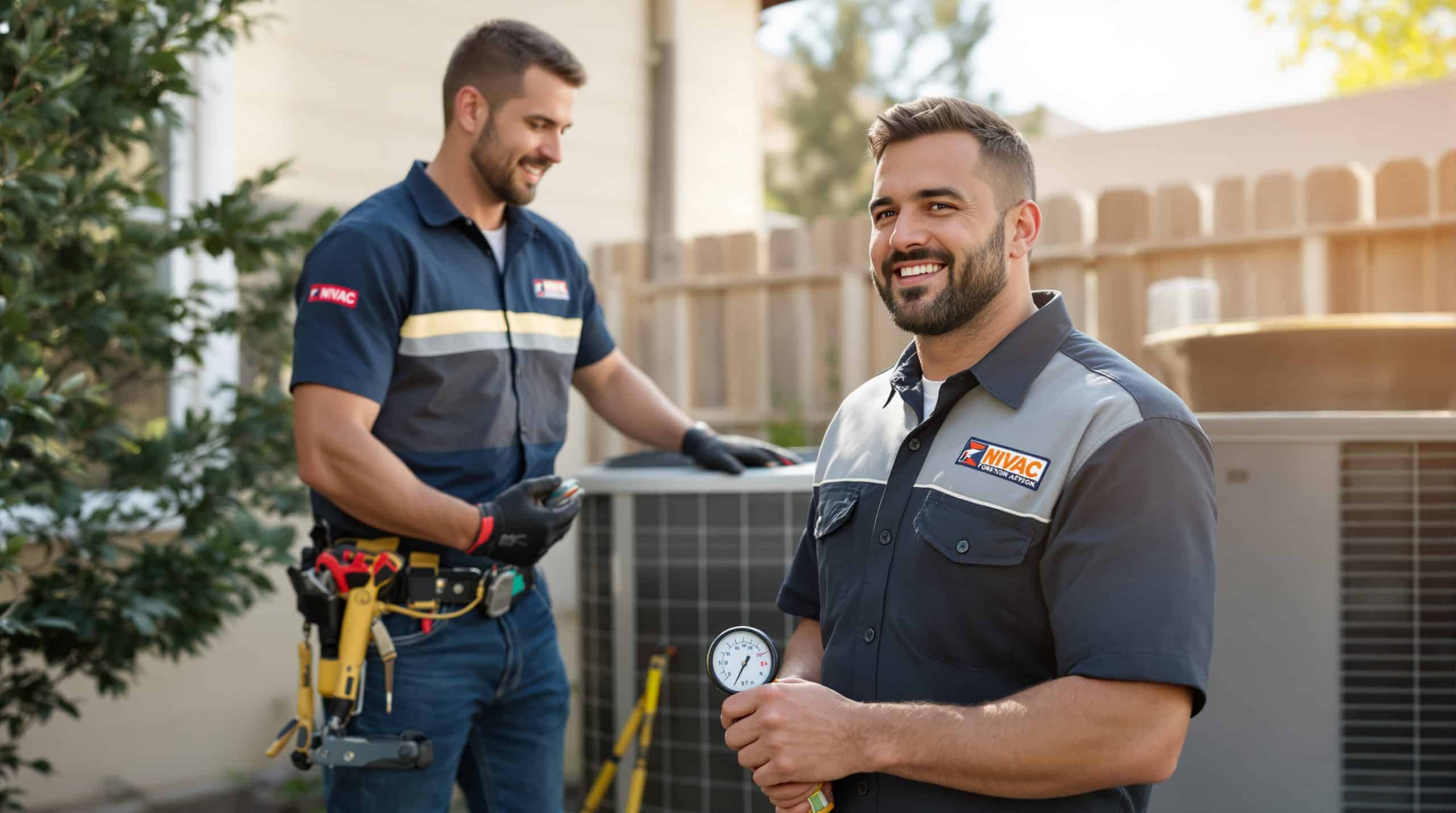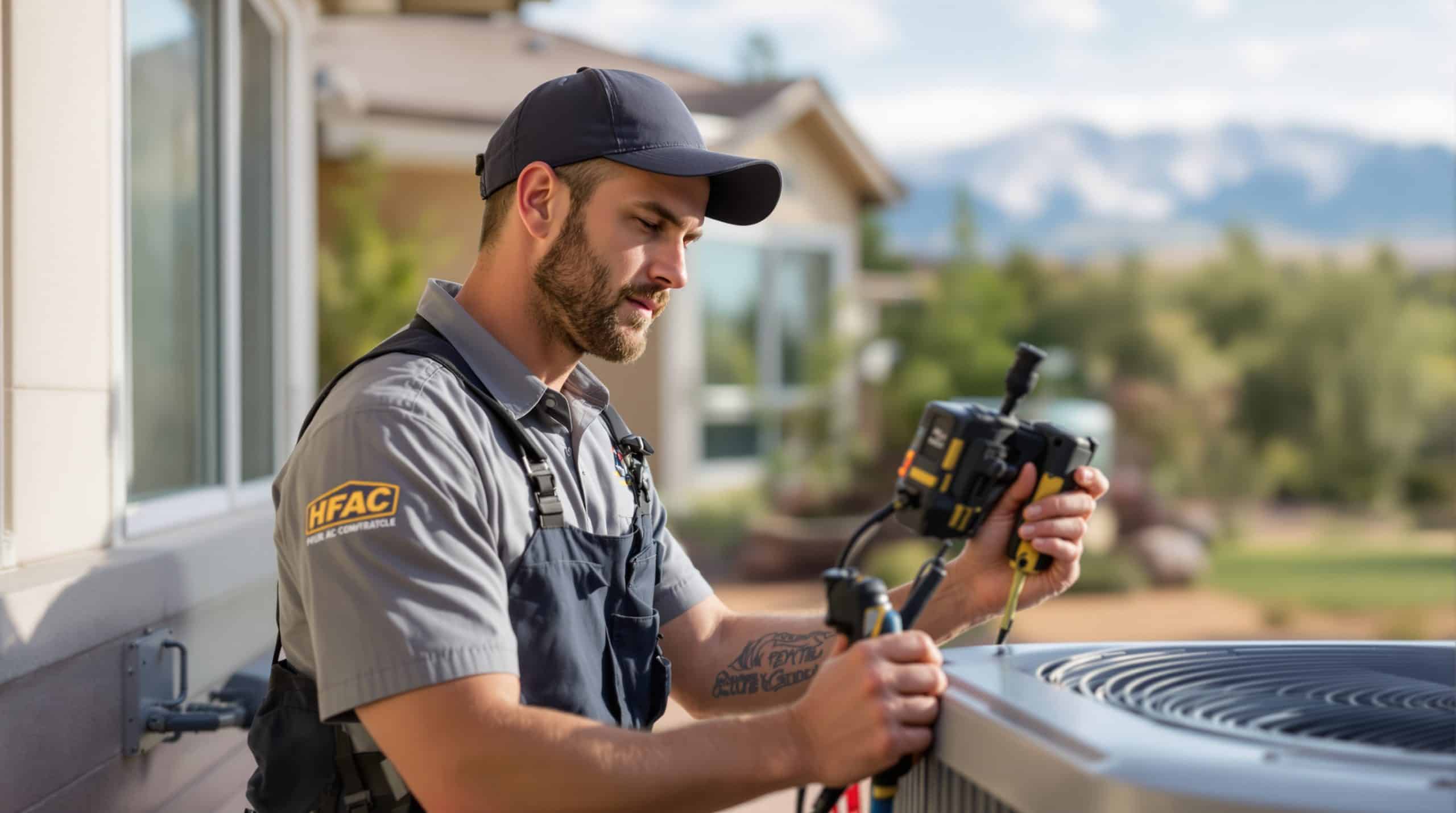
It is early August and the thermostat in a Fountain living room reads 84 degrees, even though the air conditioner has been running since noon. The family just moved to a rental near Fort Carson last spring, and nobody mentioned that a house built for a different climate would struggle this hard against a High Plains summer afternoon. Down the road in Widefield or out toward Security, plenty of other homeowners are having the same conversation with themselves right now: is this a quick fix, or does the whole system need a second opinion.
Key Takeaways
- Fountain sits at a distinct elevation and exposure profile: Southern El Paso County's heat, wind, and altitude combine to stress AC systems differently than homes closer to downtown Colorado Springs.
- Fort Carson proximity shapes the housing stock: A large share of Fountain homes are rentals or starter properties tied to military turnover, which affects how systems have been maintained and sized.
- Licensing and certification are non-negotiable: Colorado requires specific credentials for HVAC work, and manufacturer authorization adds another layer of accountability.
- Military families face unique timing pressure: PCS schedules do not wait for HVAC problems, so response speed and flexibility matter more here than in many markets.
- Local experience prevents costly guesswork: A contractor who regularly services Fountain homes already knows which failure patterns and sizing mistakes to watch for.
1. Fountain's Climate and Fort Carson Proximity: Why Local Expertise Matters
Fountain sits just south of Colorado Springs proper, at an elevation still well above sea level, but with less tree cover and more open exposure than neighborhoods closer to the foothills. That combination means direct sun exposure on roofs and west-facing walls tends to run hotter for longer stretches during summer afternoons, and homes here often work their air conditioners harder than a comparably sized house tucked into a shaded Old North End lot. Wind is also a bigger factor in Fountain than many homeowners realize. Sustained gusts across the open plains near Fort Carson can affect how outdoor condenser units perform and how quickly they accumulate dust and debris.
Fort Carson's presence shapes the town in ways that go beyond traffic patterns and school enrollment. A meaningful share of Fountain's housing stock cycles through renters and short-term owners tied to military assignments, which means HVAC systems sometimes go through several occupants in a short span without anyone taking full ownership of maintenance. A contractor who works in Fountain regularly recognizes these patterns quickly: the furnace that has never had a real tune-up, the AC unit installed by whoever was cheapest during a rushed move-in, the ductwork nobody has looked at in years.
Elevation and Combustion Adjustments
Colorado Springs and its surrounding communities, including Fountain, sit at an elevation that changes how fuel-burning appliances operate. Furnaces need to be adjusted for altitude to burn fuel completely and safely, because thinner air affects the air-to-fuel ratio inside the combustion chamber. A contractor unfamiliar with high-altitude adjustment can leave a furnace burning inefficiently, which wastes fuel and, in worse cases, raises carbon monoxide risk. This is technical knowledge that should be assumed, not something a homeowner has to ask about.
Open Terrain and Equipment Wear
The relatively flat, exposed terrain around Fountain means outdoor units face more direct sun and windblown grit than systems installed in more sheltered parts of El Paso County. Condenser coils can collect dust faster, and equipment placed without adequate shading may run harder just to keep up. A contractor who knows the area will often recommend simple placement or maintenance adjustments that a system builder working from a generic playbook would miss entirely.
Housing Stock Diversity
Fountain includes everything from decades-old ranch homes to newer developments built for growing military families, and each housing type carries different HVAC quirks. Older homes may have undersized ductwork or furnaces that predate current combustion standards, while newer builds sometimes have systems sized by a builder's standard spec sheet rather than a proper load calculation for the specific home. Recognizing which situation applies takes someone who has actually walked through a range of Fountain properties, not a one-size-fits-all quote.
2. Common AC and Cooling Issues in Fountain Homes
Summer cooling calls in Fountain tend to cluster around a handful of recurring problems, and most of them trace back to either equipment age, sizing mismatches, or airflow restrictions rather than dramatic mechanical failures. Homeowners often describe the same frustration: the AC is running, the vents are blowing air, but certain rooms never quite cool down. That symptom almost always points to either a duct issue or a system that was undersized or oversized for the home's actual square footage and layout.
Refrigerant-related problems also show up more than homeowners expect, particularly in systems that are ten or more years old. Older units may use refrigerants that are being phased out under federal transition rules, and a system that is low on charge is often masking a slow leak rather than a one-time fluke. Ignoring a recurring low-refrigerant issue eventually shortens the compressor's life, turning a moderate repair into a full system replacement.
Uneven Cooling Between Rooms
Hot upstairs bedrooms and a comfortably cool main floor is one of the most common complaints A & Z hears from homes throughout Fountain and neighboring Security-Widefield. This pattern usually points to duct design problems, leaky supply runs, or a single-zone system trying to serve a home with very different heat loads on each level. Sealing and balancing the duct system often solves this more effectively than simply installing a bigger unit, which can actually make short-cycling worse.
Systems That Run Constantly Without Cooling Enough
An AC that runs nearly nonstop through a Fountain afternoon but never quite reaches the thermostat setpoint is often undersized for the home, has a refrigerant leak, or is fighting duct leakage that dumps cooled air into an attic or crawlspace before it reaches the living space. Homeowners sometimes assume this means they need a bigger unit, but an honest diagnostic will check duct integrity and refrigerant charge before recommending a larger, more expensive system.
Aging Equipment Nearing the End of Its Service Life
Many Fountain homes still run air conditioners installed well over a decade ago, and these older units become less efficient and more failure-prone every summer they operate past their expected service life. A contractor should be able to walk a homeowner through the honest tradeoffs, repair cost versus remaining lifespan, energy efficiency gains from newer SEER2-rated equipment, and available utility rebates, rather than pushing replacement as the default answer to every service call.
3. What Licensing and Credentials to Look for in a Fountain HVAC Contractor
Colorado does not have a single blanket statewide HVAC licensing system the way some states do, which makes local credential verification more important, not less. Homeowners in Fountain should confirm that any contractor they hire carries the appropriate El Paso County or municipal licensing for mechanical work, current liability insurance, and technician-level certification that proves the people actually touching the equipment know what they are doing. A company's marketing claims mean little if the technician on the job cannot answer basic technical questions about the system in front of them.
NATE certification, administered through North American Technician Excellence, is one of the clearest signals of technical competency in the industry because it tests real diagnostic and installation knowledge rather than just completed training hours. Manufacturer authorization is another strong signal. An Armstrong Air Authorized Dealer, for example, has met that manufacturer's standards for training, service quality, and warranty support, which matters if a homeowner ever needs to file a warranty claim on newly installed equipment.
Manufacturer Authorization and Warranty Protection
Buying equipment from a manufacturer-authorized dealer typically protects the manufacturer's warranty coverage in ways that an unauthorized installation may not. If a furnace or AC system develops a defect within its warranty period, an authorized dealer has direct manufacturer support and documentation trails that make the claims process smoother. Homeowners should ask directly whether a contractor holds current authorization status rather than assuming every installer carries the same backing.
Specialty Certifications Beyond the Basics
Some HVAC needs go beyond standard installation and repair. Homes without existing ductwork, common in some of Fountain's older properties, may benefit from small-duct high-velocity systems that avoid major construction. Duct sealing technology like Aeroseal addresses leakage that standard maintenance cannot fix. These are specialty certifications that not every contractor in the region holds, and homeowners with unusual home layouts or persistent comfort complaints should ask specifically whether a contractor has this training.
Verifying Insurance and Local Standing
Beyond licensing, homeowners should confirm a contractor carries active liability insurance and worker's compensation coverage, protecting the homeowner if equipment is damaged or a technician is injured on the property. A company with a long-standing Better Business Bureau rating and a documented history in the region offers more accountability than a contractor with no verifiable local track record.
4. Heating and Furnace Considerations for Fountain Winters
Fountain winters bring the same high-altitude cold that affects the rest of El Paso County, with cold snaps that can drop temperatures sharply overnight and put real strain on furnaces that have not been maintained. A furnace that struggled quietly all summer with a dirty flame sensor or a worn igniter often fails completely during the first hard freeze, usually on a weekend or holiday when getting service feels hardest. Annual furnace tune-ups before the heating season starts catch these small failures before they become no-heat emergencies.
Carbon monoxide safety deserves specific attention at Fountain's elevation. Thinner air changes combustion dynamics, and a furnace that is not properly tuned for altitude can produce more carbon monoxide than the same unit would at sea level. A legitimate furnace tune-up always includes a combustion and carbon monoxide check, not just a filter change and a visual inspection, and homeowners should ask directly whether that check is part of the service being performed. The EPA's guidance on carbon monoxide safety explains why properly functioning combustion appliances and working detectors both matter for indoor safety.
Heat pumps are becoming a more common conversation in Fountain as cold-climate models improve, and Xcel Energy currently offers rebates worth up to $2,250 for qualifying heat pump installations, a meaningful incentive for homeowners weighing their next heating system. A contractor should be able to explain honestly whether a cold-climate heat pump can handle a Colorado Springs area winter on its own or whether a hybrid setup with a backup furnace makes more sense for a specific home, rather than defaulting to whichever equipment carries the best margin.
5. Military and First Responder Considerations for Fountain Families
Fountain's identity is deeply tied to Fort Carson, and that reality shapes what HVAC service needs to look like for a large share of local homeowners and renters. Military families often move on compressed timelines, sometimes with only a few weeks between orders and a move date, which means HVAC problems discovered during a home inspection or a pre-move walkthrough need answers fast rather than a service appointment scheduled two weeks out. A contractor working regularly in Fountain should understand PCS timing pressure and be able to prioritize scheduling around it when the situation calls for it.
First responders and military households also tend to have less flexibility for waiting home during a standard weekday service window, given rotating shifts and deployment schedules. A contractor that offers evening or weekend flexibility, along with genuinely fast emergency response, reduces the friction of getting a system fixed around an unpredictable schedule. Straightforward communication also matters more here: a family preparing for a PCS move does not need upsell pressure on a system they are about to leave behind, they need an honest answer about what is actually broken and what it will take to either fix it or disclose it fairly to the next occupant.
A 10% military discount is a small but meaningful gesture that acknowledges the specific financial pressure of a military move, where relocation costs pile up fast and every reduced expense helps. Beyond the discount itself, the larger point is respect: military families in Fountain deserve a contractor who treats their timeline and their trust seriously, not one who sees a PCS deadline as leverage for a rushed sale.
6. Indoor Air Quality and Duct Performance in Fountain Homes
Colorado Springs and its surrounding communities, including Fountain, rank among the more allergy-prone metro areas in the country, and that reality does not stop at the city limits. Grass, ragweed, and dust allergens common to the region combine with dry indoor air to make symptoms worse for a lot of Fountain households, especially in homes with older or leaky duct systems that pull in unconditioned attic or crawlspace air. Wildfire smoke season adds another layer of concern most summers, with smoke drifting in from regional fires and pushing outdoor air quality into unhealthy ranges on the AirNow.gov air quality index.
Duct leakage compounds all of these issues. A duct system with unsealed joints does not just waste conditioned air, it can also pull in dust, insulation particles, and outdoor allergens through gaps and deliver them straight into living spaces. Aeroseal duct sealing technology addresses this from the inside, sealing leaks that are physically impossible to reach with traditional tape or mastic, and it is a service that few contractors in the Colorado Springs region are certified to perform.
Whole-home humidifiers are another common recommendation for Fountain homes, since Colorado's dry climate pulls moisture out of indoor air throughout the heating season, contributing to dry skin, static, and irritated sinuses. Pairing a properly sized humidifier with a well-sealed duct system and a quality air filtration setup addresses comfort and health concerns together rather than treating them as separate problems.
7. Why A & Z Mechanical Serves Fountain Homeowners
A & Z Mechanical has served Colorado Springs and the surrounding communities for more than 25 years, and that includes Fountain families whose HVAC needs often get overlooked by contractors focused on the busier neighborhoods closer to downtown. The company is Family Operated, led by Zonn Thompson, a Colorado Springs native who built the business on small-town ethics and straight answers rather than sales quotas. That foundation matters in a market like Fountain, where military turnover means a lot of homeowners and renters have limited history with local contractors and need to trust a recommendation quickly.
A & Z holds credentials that set it apart in the region: it is an Armstrong Air Authorized Dealer, holds Colorado Mechanical A License No. MA050286, and it is the only Unico small-duct high-velocity certified installer in the Colorado Springs market, along with being one of the only Aeroseal duct sealing certified contractors in the area. For a Fountain homeowner dealing with an older home's uneven ductwork, a rental property without central air, or a furnace that has never been properly tuned for altitude, those specialty certifications translate directly into better options than a general contractor can offer.
Every comfort advisor at A & Z is trained to diagnose the actual problem rather than find one, which removes the incentive to recommend a repair or replacement a homeowner does not actually need. Combined with a standard of standing by every job, a BBB A+ rating held for over 20 years, and a 10% military discount for the many Fort Carson families A & Z serves, the goal is straightforward: give Fountain homeowners a handshake they can trust and honest diagnostics every time, whether the job is a routine tune-up or a full system replacement.
FAQs
How fast can an HVAC contractor respond to an emergency in Fountain, CO?
A & Z Mechanical offers 24/7 emergency service across its Colorado Springs area service territory, including Fountain. A true emergency, like no heat during a hard freeze or a complete AC failure during extreme summer heat, should get a same-day response whenever possible.
Does A & Z Mechanical actually serve Fountain, or just Colorado Springs proper?
Yes, Fountain is within A & Z Mechanical's regular service area, along with other surrounding communities like Monument, Security-Widefield, Fort Carson housing areas, and Peyton. The company has served El Paso County homeowners since 2001.
How do I know if my Fountain home's AC problem is a repair scam or a legitimate recommendation?
Ask for a clear explanation of the diagnosis, including what was tested and what the results showed, before agreeing to any repair or replacement. A & Z's comfort advisors are trained to diagnose honestly, specifically to remove the incentive for unnecessary upselling.
Is an HVAC maintenance plan worth it for a Fountain rental property?
Yes, especially for rental properties with turnover, where a maintenance plan creates a documented service history that protects both the landlord and incoming tenants. Regular tune-ups also catch small issues, like a worn part or an altitude-related combustion adjustment, before they become expensive failures.
Can I schedule routine HVAC maintenance around a military family's rotating schedule?
Yes, A & Z Mechanical works with military families across all five local installations, including Fort Carson, and can accommodate scheduling around deployments, shift work, and PCS timelines. Homeowners should mention scheduling constraints when booking so the visit can be planned around them.
Conclusion
Fountain's combination of open terrain, elevation-driven combustion needs, and a housing stock closely tied to Fort Carson's military community makes it a market where local HVAC experience genuinely changes outcomes. Homeowners here deal with the same altitude sizing questions as the rest of El Paso County, plus the added pressure of military timelines, rental turnover, and a climate that stresses AC and furnace equipment in specific, predictable ways. Choosing a contractor who understands these local patterns, and who can prove real licensing, manufacturer authorization, and technical certification, protects both comfort and budget over the long run.
A & Z Mechanical has built its reputation in Colorado Springs and communities like Fountain on small-town ethics and a handshake you can trust, backed by more than 25 years of local history, Armstrong Air Authorized Dealer status, and specialty certifications in Unico small-duct systems and Aeroseal duct sealing that few other contractors in the region can offer. Whether the issue is an aging furnace heading into its first hard freeze or an AC system that never quite cools the upstairs bedrooms, the goal stays the same: honest diagnostics and upfront pricing, delivered by comfort advisors who have no reason to recommend anything a home does not actually need.
Get A Quote to get a straight answer about your Fountain home's heating or cooling system, from a contractor that treats military timelines, older housing stock, and Colorado Springs altitude as everyday expertise rather than an afterthought.