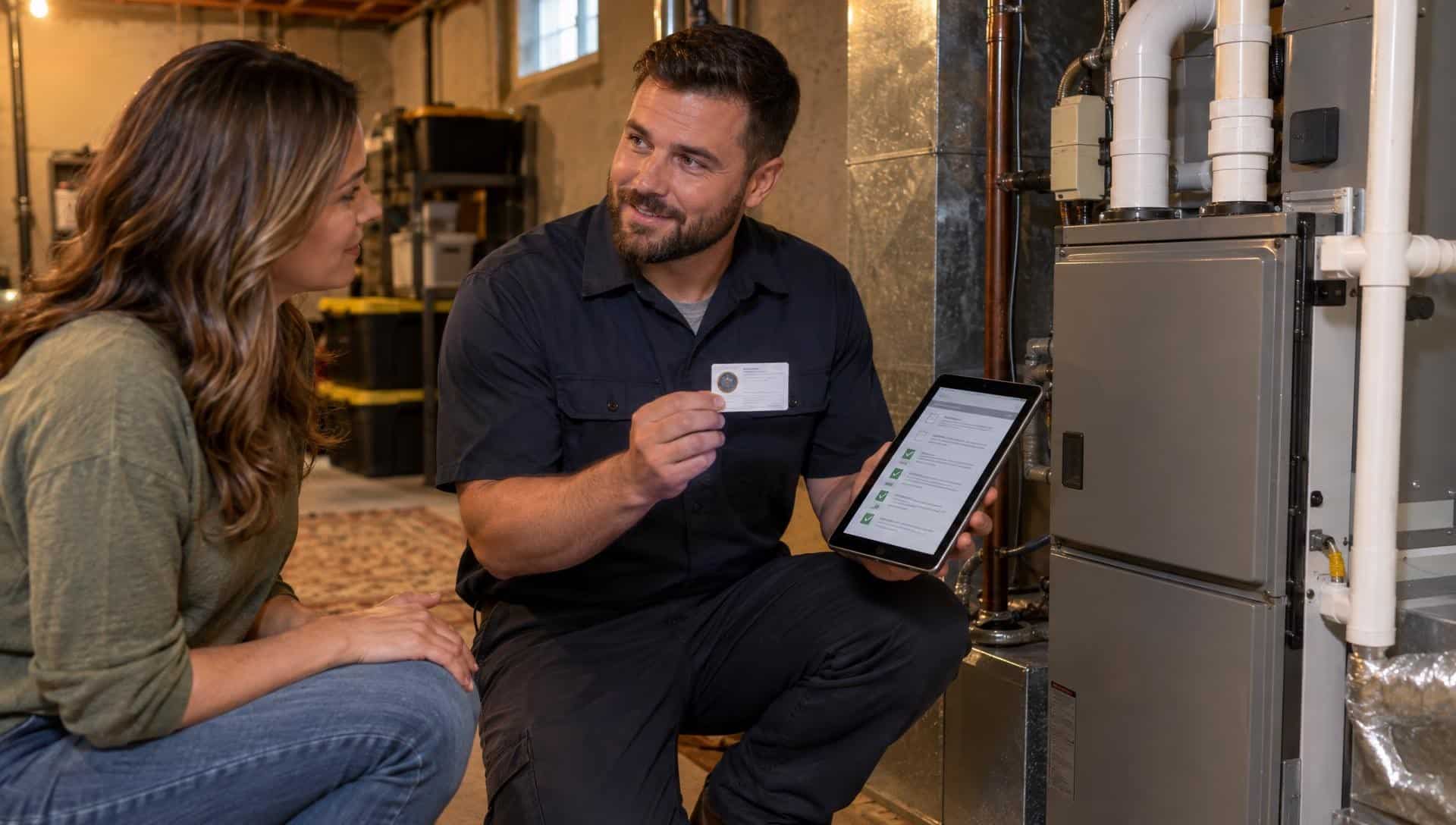
It is 9 p.m. in early January, the furnace in your Old North End bungalow has quit, and the truck in your driveway has a "certified" sticker on the door. You want to believe it, but you also want to know what that word actually means before you hand over a credit card. A few specific questions, asked calmly at the front door, can tell you more about a contractor than any ad ever will.
Key Takeaways
- Certifications are a vetting tool: They give you a way to check a contractor's skills and accountability before the work starts, not after a problem shows up.
- NATE certifies individuals: The credential belongs to a technician who passed testing, so ask who will actually be standing in your home.
- Licensing is local here: Colorado handles HVAC contractor oversight largely at the local level, so confirm requirements with the Pikes Peak Regional Building Department.
- Specialty credentials solve specific problems: Unico and Aeroseal certifications matter most for historic homes, homes without ductwork, and leaky duct systems.
- Verify at the source: Every legitimate credential can be checked with the organization that issued it, and a good contractor will welcome the question.
1. Why Certifications Are Not Just Paperwork
Most homeowners cannot judge HVAC work by looking at it. You cannot tell by eye whether a gas furnace is burning cleanly at 6,035 feet, whether a new air conditioner was sized correctly for your house, or whether a refrigerant line was brazed properly. That gap in knowledge is exactly where overpriced repairs and unnecessary replacements tend to live, and it is why skeptical homeowners are right to ask hard questions.
Certifications and licenses are the closest thing you get to a pre-work inspection of the person doing the job. They are imperfect, and no single credential guarantees a good outcome. But taken together, they show whether a contractor invested in training, answers to an outside body, and has a track record someone other than the contractor can confirm. That is a very different starting point than a friendly voice on the phone and a promise that "we do it right."
Certifications Stand In for Skills You Cannot See
A credential is a shortcut to a question you would otherwise have to answer yourself: does this person actually know what they are doing? A technician who passed a standardized exam on heat pump operation or gas heating has demonstrated knowledge that an outside organization verified. You are not trusting a salesperson's description of their own skills. You are trusting a test they had to pass.
Why Altitude Raises the Stakes
Colorado Springs is not a typical HVAC market. Thinner air changes how fuel burns in a furnace, how equipment should be sized, and how heat pumps perform in cold weather. A technician who learned the trade at sea level and never adjusted for elevation can leave you with a furnace that runs poorly or a system that never quite keeps up. Training and credentials do not automatically solve that, but they are the foundation that local experience gets built on.
What Each Credential Actually Tells You
The table below gives a quick overview of the credentials covered in this article. Each one answers a different question, which is why no single badge should settle your decision.
| Credential | What it shows | Who stands behind it |
|---|---|---|
| NATE certification | Tested technician knowledge | Independent testing organization |
| Local mechanical licensing and permits | Legal authority to do the work | Local building department |
| EPA Section 608 | Legal refrigerant handling | U.S. EPA |
| Armstrong Air Dealer | Brand training and support | Equipment manufacturer |
| Unico or Aeroseal certification | Method-specific installation training | Product manufacturer |
| BBB accreditation | Complaint-handling history | Better Business Bureau |
Notice that these credentials come from different places. A manufacturer cannot vouch for a building permit, and a building department cannot vouch for a technician's heat pump knowledge. That is what makes them useful as a set.
2. What NATE Certification Actually Tests For
If you search for NATE certified HVAC Colorado Springs, you will find dozens of companies using the logo. NATE stands for North American Technician Excellence, and its certification is the most widely recognized technician credential in the residential HVAC trade. It is run by an independent testing organization rather than a manufacturer or a trade school, which is part of why it carries weight.
The important thing to understand is what the credential covers and what it does not. NATE certification tells you a technician has passed a knowledge test. It does not tell you how that person treats customers, how honest their recommendations are, or how many years they have spent working in a high-altitude climate. Think of it as a floor for technical competence, not a ceiling for overall quality.
Core Knowledge and Specialty Exams
NATE certification is built around testing. According to NATE, technicians typically sit for a core exam covering general HVAC knowledge, plus a specialty exam in a particular area. Specialty areas include air conditioning, heat pumps, gas heating, and air distribution, among others. A technician certified in gas heating has shown knowledge of furnace operation, combustion, and safety, which matters a great deal when carbon monoxide is on the line.
Why Renewal Matters
NATE certifications are not permanent. They are issued for a set period and must be renewed through continuing education or retesting. That matters in a trade where refrigerants, controls, and equipment standards keep changing. A technician with a current certification has kept learning, while one with an expired card may not have opened a manual since the day they passed.
What NATE Does Not Tell You
NATE certification belongs to an individual, not to a company. A contractor can display the logo on trucks and websites while only some of their technicians hold current certifications. The practical question to ask is whether the person coming to your home holds it. At A & Z Mechanical, our comfort advisors are NATE certified, and you should feel free to ask any contractor to show you their technician's certification card or ID number.
3. Colorado Mechanical Licensing Requirements Explained
Licensing is where many homeowners get confused, because the rules in Colorado do not work the way they do in many other states. Colorado licenses electricians and plumbers at the state level, but as of this writing it does not issue a single statewide license for HVAC contractors. Instead, oversight largely happens locally, through building departments that handle permits, inspections, and contractor registration.
That local structure puts more responsibility on you as the homeowner to ask the right questions. A contractor who says "Colorado doesn't require a license for HVAC" may be technically correct about the state, yet still be skipping requirements that apply in your city or county. Rules also change over time, so treat this section as a guide to the right questions and confirm current details with the agency directly.
Local Licensing in the Pikes Peak Region
In El Paso County, the Pikes Peak Regional Building Department is the main agency to know. It handles permits, inspections, and contractor licensing across much of the region. Some smaller communities and municipalities have their own building departments, so a home in Manitou Springs or Woodland Park may follow a different process than a house in Falcon or Monument. A reputable contractor will know which office covers your address and will explain it without being asked twice.
Permits and Inspections
Many HVAC projects, especially furnace and air conditioner replacements, involve permits and inspections. Those inspections exist for good reasons, including gas line safety, venting, and electrical connections. A contractor who suggests skipping a permit to save you time or money is shifting risk onto you. If something goes wrong later, an unpermitted installation can complicate insurance claims and home sales.
Federal Refrigerant Certification
Separately from any state or local rules, federal law requires technicians who handle refrigerants to hold EPA certification under Section 608 of the Clean Air Act. This applies to anyone servicing or installing equipment that contains refrigerant, and it exists to prevent releases that harm the environment. It is a legal baseline rather than a mark of excellence, but a technician who cannot confirm they hold it should not be touching your air conditioner or heat pump.
4. Specialty Certifications Like Unico and Aeroseal
Some of the most meaningful credentials in HVAC are narrow ones. They do not apply to every home, but when they apply to yours, they can be the difference between a clean solution and a costly workaround. Two of the most relevant in Colorado Springs are Unico small-duct high-velocity certification and Aeroseal duct sealing certification.
These specialty credentials exist because certain jobs require specific methods, tools, and training that general HVAC education does not cover. A contractor who has never installed a small-duct system will often tell you it cannot be done, or push you toward something that does not fit your home. That is not always dishonesty. Sometimes it is simply the limit of what they were trained to do.
Unico and the Historic Home Problem
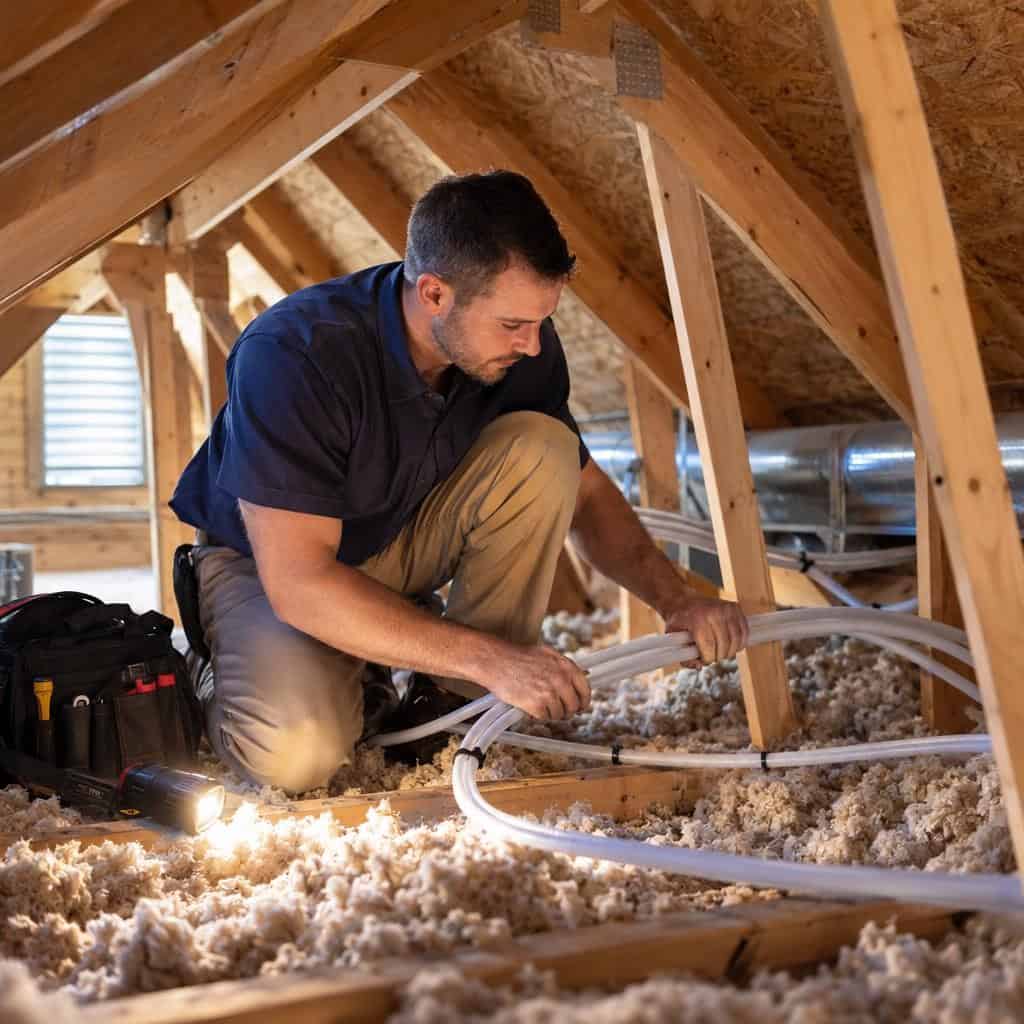
Many older homes in Colorado Springs, Manitou Springs, and the Old North End were built without ductwork. Owners often assume central air would mean tearing into plaster walls and original woodwork. The Unico System uses small, flexible supply tubes that can be routed through tight spaces such as closets, attics, and wall cavities, which is why it is popular for historic and hard-to-retrofit homes. Unico certifies installers because the system must be designed and installed correctly to perform well. A & Z Mechanical is the only Unico small-duct high-velocity certified installer in the Colorado Springs market.
Aeroseal and Hidden Duct Leaks
Leaky ducts can undermine even a brand-new furnace or air conditioner. Conditioned air escapes into attics, crawl spaces, and wall cavities before it ever reaches the room, which shows up as hot and cold spots and higher energy use. Aeroseal is a duct sealing process that works from the inside of the duct system to seal leaks that are impossible to reach by hand. A & Z Mechanical is one of the only Aeroseal certified contractors in the region, so a certified installer is not easy to find locally.
Armstrong Air Dealer Status
Manufacturer authorization is a quieter credential, but it matters. As an Armstrong Air Dealer, A & Z Mechanical works within the manufacturer's training and support framework for the equipment we install. For you, that means access to manufacturer documentation, warranty processes, and product knowledge that independent installers may not have. Ask any dealer which brands they are authorized for, and confirm it with the manufacturer if you want extra certainty.
5. How BBB Accreditation Reflects Long Term Accountability
The Better Business Bureau is not a government agency, and a BBB rating is not a technical credential. It will not tell you whether a technician understands combustion or whether a duct system was designed well. What it does show is how a company behaves after the sale, which is information that certifications and licenses cannot provide.
For homeowners worried about being upsold or mistreated, that history matters. A contractor can pass every exam and still be a nightmare to deal with when something goes wrong. A long, clean record with a third-party organization that records complaints and responses is evidence of how a business treats people when it is not easy.
What a BBB Rating Measures
BBB ratings are based on factors the organization publishes, including complaint history, how a business responds to complaints, and how long it has operated. You can look up any business at BBB.org and read the details yourself. Pay attention to patterns rather than a single complaint, and look at how the contractor responded. A business that engages with an upset customer and works toward a fair outcome is telling you something valuable.
Why Longevity Matters
Time in business is one of the few things a bad actor cannot fake. Contractors who rely on high-pressure sales and rotating names tend not to last, while family-owned companies with local roots have to live with their reputations. A & Z Mechanical has served Colorado Springs since 2001, more than 25 years, and has held a BBB A+ rating for over 20 years. Longevity is not proof of honesty by itself, but it makes honesty far more likely.
Where BBB Fits Among Other Credentials
Use BBB as one layer in your vetting, not the whole decision. Pair it with technician certifications, local licensing, and specifics about how the company pays and trains its people. For example, our comfort advisors are paid hourly rather than on commission, which removes the incentive to push a replacement you do not need. That structure, backed by our 100% satisfaction guarantee, is the kind of proof worth asking any contractor to show you.
6. Red Flags When a Contractor Cannot Answer Certification Questions
Most homeowners feel awkward asking a stranger to prove their qualifications, especially when the house is cold and the situation is urgent. That awkwardness is exactly what high-pressure contractors count on. The good news is that a reliable contractor expects these questions and answers them without hesitation.
You do not need to be confrontational. A calm, curious tone works best: "Can you tell me which certifications you hold and who I should call to confirm them?" How the person responds will tell you almost everything. Confident contractors give clear answers and offer documentation, while uncomfortable ones tend to change the subject.
Vague or Defensive Answers
Watch for responses like "we're fully certified" with no names, numbers, or organizations attached. A real credential has an issuing body, an identification number, and a way to verify it. If a technician gets irritated, says the question is unnecessary, or cannot say who certified them, treat that as a warning. Defensiveness about basic qualifications rarely goes away once the work begins.
Pressure Tactics and Missing Diagnostics
Another red flag is a recommendation that arrives before a diagnosis. If someone declares your furnace dead after five minutes, or insists the price is only good for today, slow down. Honest diagnostics mean the technician tests, explains what they found, shows you evidence when possible, and gives you time to decide. You can always ask for the findings in writing and get a second opinion without apology.
Ignoring Altitude and Permits
A contractor who never mentions elevation when discussing furnace combustion, equipment sizing, or heat pump performance may not understand the Colorado Springs market. Likewise, a contractor who says a permit is unnecessary for a major installation should be asked which building department they work with and why. Specific, local answers show experience. Generic answers show a company that treats every city the same.
7. How to Verify a Contractor's Credentials Before You Hire
Verification is the step most people skip, and it is the step that turns a checklist into protection. Every credential discussed in this article can be confirmed with the organization behind it. That takes minutes, and it works whether you are replacing a furnace in Fountain, adding cooling in Black Forest, or planning a new system after a PCS move to Fort Carson or Peterson Space Force Base.
If you are new to the area, verification matters even more. Military families relocating on a tight timeline often have to choose a contractor quickly and without local word of mouth. Taking ten minutes to confirm credentials gives you confidence even when you do not know a single neighbor to ask.
Ask Before the Visit
Start with a few written or phone questions before anyone comes to your home. Ask which technician will be assigned, whether that person holds current NATE certification, which local building department the company works with, and whether permits are included in the project. Ask about specialty needs too. If you have a historic home or no ductwork, ask whether the contractor is certified to install Unico systems. Clear, specific answers are a good sign.
Check the Source Directly
Do not rely on logos or screenshots. Confirm NATE certification through NATE, check licensing and permit requirements with the Pikes Peak Regional Building Department or the building department for your community, and read the company's profile and complaint history on BBB. For manufacturer credentials such as Armstrong Air, Unico, or Aeroseal, check with the manufacturer or its dealer locator. Each lookup takes a few minutes and removes guesswork.
Compare Written Quotes
Once you have confirmed credentials, ask for written quotes that spell out equipment, scope, permits, warranty terms, and what happens if the diagnosis changes. Compare them line by line instead of by the bottom line alone. A contractor who is confident in their qualifications and their numbers will not mind that scrutiny. If you are in the military, ask about discounts as well. A & Z Mechanical offers a 10% military discount for those who serve at Fort Carson, Peterson, Schriever, Cheyenne Mountain, and the Air Force Academy.
FAQs
Is NATE certification required to work on HVAC in Colorado Springs?
No, NATE certification is voluntary and not a legal requirement. It is an independent credential showing a technician passed standardized exams. Legal requirements come from local building departments, such as the Pikes Peak Regional Building Department, and from federal rules like EPA Section 608 for refrigerant handling. NATE is best used as a quality signal, not a legal one.
Does Colorado have a statewide HVAC license?
As of this writing, Colorado does not issue a single statewide HVAC contractor license the way it does for electricians and plumbers. Requirements are generally handled locally through building departments. Rules can change, so confirm current requirements with the Pikes Peak Regional Building Department or the building department that covers your address before hiring.
How can I verify a technician's NATE certification?
Ask the technician for their certification card or ID number, then confirm it with NATE directly. Check that the certification is current, since NATE credentials must be renewed, and that it covers the area relevant to your job, such as gas heating, air conditioning, or heat pumps. A confident technician will not mind you checking.
Is a BBB rating a reliable sign of a trustworthy HVAC contractor?
It is a useful sign but not a complete one. BBB ratings reflect complaint history, responses, and time in business, so they show how a company treats customers over the long run. Read the actual complaints and responses, then combine that with technician certifications and local licensing for a fuller picture.
Why does a Unico or Aeroseal certification matter?
These certifications show a contractor was trained by the manufacturer on a specialized method. Unico matters for historic homes and houses without ductwork, where traditional systems may not fit. Aeroseal matters for leaky duct systems that waste conditioned air. If your home has those issues, a certified installer is far more likely to design and install the solution correctly.
Conclusion
Certifications work best when you treat them as a set of questions rather than a single badge. NATE speaks to a technician's tested knowledge, local licensing and permits speak to legal accountability, federal refrigerant certification covers a safety baseline, specialty credentials like Unico and Aeroseal address particular home problems, and a long BBB record speaks to how a company behaves over time. Verified together, they turn a vague feeling of trust into something you can actually check.
A & Z Mechanical is a family-owned HVAC contractor that has served Colorado Springs and El Paso County since 2001. Our comfort advisors are NATE certified, we are an Armstrong Air Dealer, and we are the only Unico small-duct high-velocity certified installer in the Colorado Springs market, as well as one of the only Aeroseal certified contractors in the region. We believe honest diagnostics and upfront pricing start with being willing to show our work, so ask us anything on this list. That is the small-town ethics behind "We Air Because We Care."
Get A Quote and put these vetting questions to us directly, whether you need a NATE certified HVAC Colorado Springs technician for a repair or a specialist for a historic home. We will walk you through what we find, explain your options plainly, and give you a written quote you can compare with anyone else's.