Picture a July afternoon when smoke from a wildfire burning two counties away turns the sky over Pikes Peak a hazy orange, and your eyes start itching before you even step outside. Or a January morning when you wake up with a dry throat because the furnace has been running nonstop and the air in your bedroom feels like it belongs in a desert. Both scenes are ordinary parts of life at 6,035 feet, and both come back to the same question: what is actually happening to the air inside your house.
Key Takeaways
- Altitude changes everything: Thinner air at elevation affects furnace combustion, humidity retention, and how efficiently your HVAC system filters particles.
- Your HVAC system is the foundation: Air purifiers and humidifiers only work as well as the ductwork and equipment circulating air through them.
- Layered solutions beat single fixes: Filtration, humidity control, and duct sealing address different problems and work best combined, not chosen one at a time.
- Wildfire smoke and allergy season are predictable, not random: Colorado Springs ranks among the most allergy-prone metros in the country, and smoke season follows a seasonal pattern you can plan around.
- Some fixes are DIY, some are not: Simple habits help between visits, but sizing a purifier or sealing ducts correctly requires a professional assessment.
1. Why Colorado Springs homes face unique air quality challenges
Homes in Colorado Springs deal with an air quality puzzle that most national advice does not account for. At 6,035 feet, the air itself is thinner, which changes how furnaces combust fuel, how heat pumps move air, and how quickly moisture evaporates from your skin, your furniture, and the air inside your walls. That thin, dry air is a defining feature of the Front Range climate, and it shapes almost every indoor air quality decision a homeowner here has to make, from whether you need a humidifier to how often you should swap out a filter.
Layered on top of altitude is a seasonal rhythm unique to this part of Colorado. Late spring and early summer bring pollen counts that put Colorado Springs consistently near the top of national allergy-city rankings. Mid to late summer often brings wildfire smoke drifting in from fires burning across the state or region, sometimes settling into the Pikes Peak region for days at a time. Winter brings the opposite problem: closed windows, constant furnace operation, and indoor humidity that can drop low enough to crack wood trim and leave skin and sinuses feeling raw.
Altitude, dryness, and combustion
Furnaces at elevation burn fuel differently than furnaces at sea level because there is less oxygen available per cubic foot of air. A furnace that is not properly adjusted for altitude can produce incomplete combustion, which affects both efficiency and the levels of combustion byproducts that can end up in your ductwork if venting is not correct. This is one of the reasons a furnace tune-up in Colorado Springs should always include a carbon monoxide check performed with equipment calibrated for elevation, not just a generic visual inspection. Manufacturers like Carrier provide altitude derating guidance specifically because equipment performs differently above certain elevations, and a comfort advisor familiar with those specs makes a real difference in both safety and comfort.
Wildfire smoke season
Wildfire smoke does not respect city limits or county lines, and Colorado Springs can see smoke-driven air quality drops even when no fire is burning nearby. The fine particulate matter in wildfire smoke, known as PM2.5, is small enough to penetrate deep into the lungs and can seep into homes through even minor gaps in windows, doors, and duct systems. The EPA's guidance on wildfire smoke recommends creating a "clean room" with high-efficiency filtration during smoke events, which is exactly where a properly sized whole-home or portable air purifier earns its keep.
Colorado's allergy and pollen burden
Between juniper and pine in late winter, grasses through the summer, and ragweed into fall, Colorado Springs residents deal with a long allergy season with very little downtime in between. Homes with older or leaky ductwork often pull outdoor allergens directly into the return air stream, which means the HVAC system can end up working against you instead of for you during peak pollen weeks.
2. The role of your HVAC system in filtering allergens and pollutants
Every time your furnace or air conditioner runs, it pulls air through your home's return ducts, across a filter, and back out through the supply registers. That cycle happens dozens of times a day, which makes your HVAC system the single largest air-handling device in your house, larger by volume than any standalone purifier could ever be. Understanding that your system is already doing filtration work, whether well or poorly, is the starting point for any indoor air quality conversation.
The quality of that filtration depends on three things: the filter itself, the condition of the ductwork carrying the air, and whether the system is sized and balanced correctly for the home. A high-MERV filter installed in a system with leaky supply ducts is only filtering the air that actually makes it back through the return, while unfiltered attic or crawlspace air is sneaking in through gaps and cracks along the way. That is why A & Z comfort advisors look at the whole air-handling picture, not just the filter slot, when a homeowner asks about indoor air quality.
MERV ratings and what they actually mean
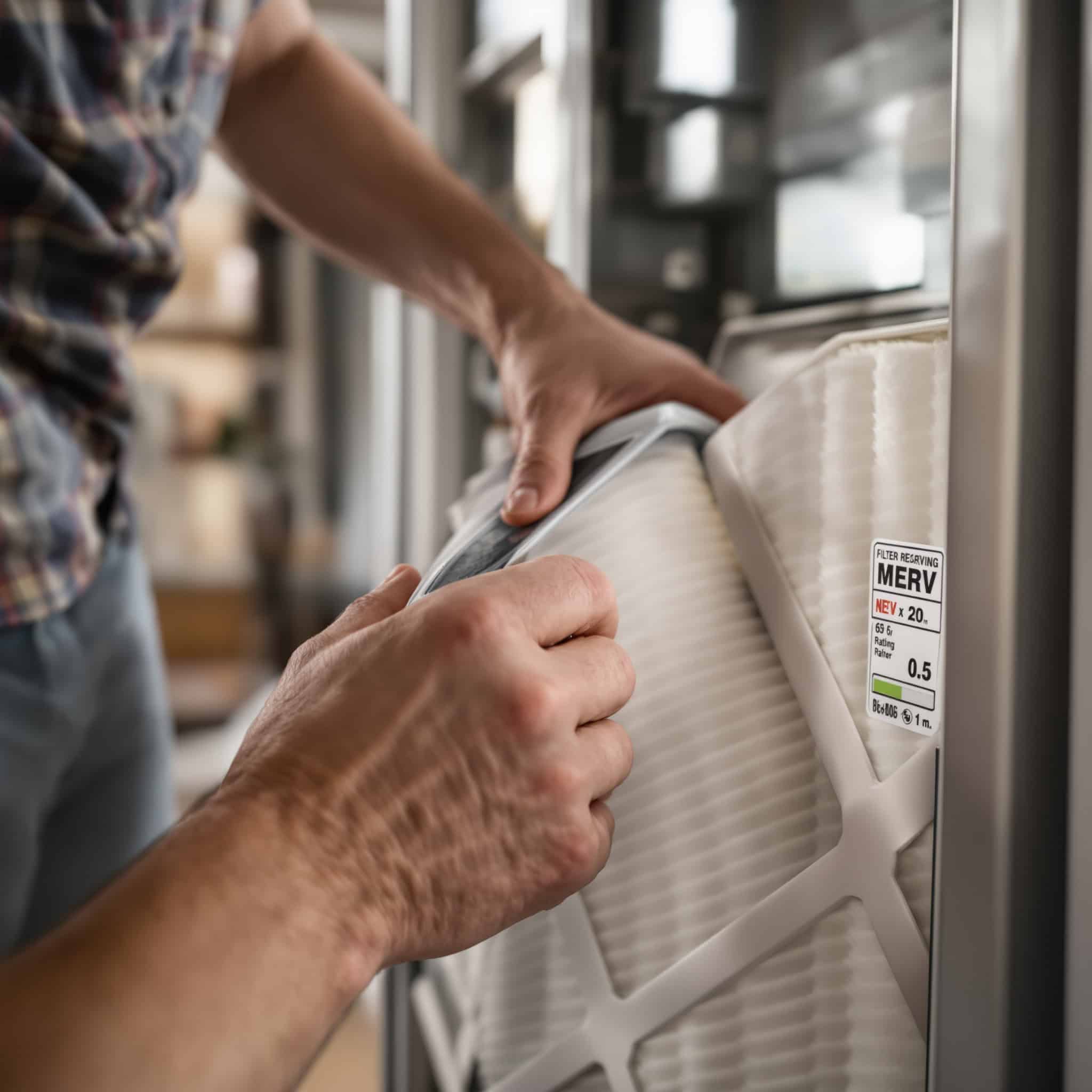
MERV, or Minimum Efficiency Reporting Value, measures how effectively a filter captures particles of different sizes, and the scale runs from 1 to 20 under ASHRAE testing standards. Higher MERV filters capture smaller particles, including some allergens and smoke particulate, but they also create more resistance to airflow. A furnace or air handler not designed for a high-MERV filter can struggle to push air through it, which reduces efficiency and can stress the blower motor over time. This is a case where more is not automatically better, and matching filter rating to equipment specification matters more than chasing the highest number on the shelf.
Ductwork condition and airflow balance
Ducts that leak, whether from age, poor original installation, or simple wear, pull in unconditioned and unfiltered air from attics, crawlspaces, and wall cavities. That air bypasses your filter entirely and mixes with the conditioned air reaching your living spaces. In older Colorado Springs homes, particularly in neighborhoods like the Old North End or parts of Manitou Springs, ductwork installed decades ago was rarely sealed to today's standards, which means a portion of every heating and cooling cycle may be drawing in dusty, unfiltered attic air.
System sizing and run time
A system that is oversized for the home cycles on and off too quickly, which means it never runs long enough to properly filter and dehumidify the air. A system that is undersized runs constantly and still cannot keep up with allergen loads during peak pollen or smoke events. At altitude, proper sizing calculations account for thinner air's effect on both combustion and refrigerant performance, which is part of why a generic sea-level sizing chart does not translate directly to a Colorado Springs installation.
3. Air purifiers, humidifiers, and duct sealing: how they work together
No single product solves indoor air quality on its own, and homeowners are often sold one piece of the puzzle as if it were the whole picture. A whole-home air purifier without properly sealed ducts is filtering air that keeps getting recontaminated by leaks. A humidifier in a home with poor duct sealing is pumping moisture into supply runs that lose a portion of that conditioned air before it ever reaches a room. Aeroseal duct sealing without a filtration upgrade cleans up airflow and efficiency but does not address particulate already circulating in living spaces. Treating these as three legs of the same stool, rather than three separate purchases, is the difference between noticeable improvement and mild disappointment.
The table below breaks down what each solution actually addresses, since homeowners often assume more overlap between them than actually exists.
| Solution | Primary problem it solves | What it does not fix |
|---|---|---|
| Whole-home air purifier | Airborne particulates: smoke, dust, pollen, pet dander | Duct leaks, low humidity, poor airflow balance |
| Whole-home humidifier | Low indoor humidity from dry Colorado climate and winter heating | Particulate filtration, duct leakage |
| Aeroseal duct sealing | Air loss and unfiltered air infiltration through duct leaks | Existing indoor particulate, humidity levels |
| Standard furnace filter upgrade | Baseline particle capture during normal system operation | Duct leaks, humidity, smoke-level particulate during severe events |
Why duct sealing changes the math for everything else
Aeroseal duct sealing works by injecting a fine polymer sealant into the duct system while it is pressurized, allowing the sealant to find and close leaks from the inside, including gaps too small or too hard to reach with manual sealing methods. Aeroseal's manufacturer documentation describes duct leakage reductions that make a measurable difference in both energy loss and air quality, because sealed ducts stop pulling unfiltered attic, crawlspace, or wall-cavity air into the system. A & Z Mechanical is one of only a handful of Aeroseal certified contractors in the region, and for homes with older or hard-to-access ductwork, sealing from the inside is often the only realistic option short of a full duct replacement.
Why humidity control is not optional at this altitude
Colorado's dry climate is not a minor inconvenience, it is a health and comfort factor that compounds during winter heating season when furnace operation strips even more moisture from already dry air. Indoor humidity that drops too low can irritate sinuses and skin, worsen static electricity, and even affect how efficiently your home retains heat, since dry air feels cooler at the same temperature than properly humidified air. A whole-home humidifier integrated with your HVAC system maintains consistent levels through the winter without the constant refilling and limited coverage of portable units.
Where air purifiers fit into the picture
Portable and whole-home air purifiers matter most during acute events, wildfire smoke, high pollen days, or for households managing allergies or asthma year-round. A whole-home unit integrated into the HVAC system treats all the air moving through the house, while portable units are useful for creating a smoke-safe room during the worst air quality days, as recommended by AirNow.gov during active fire events. Choosing between the two, or using both, depends on household needs that a comfort advisor can walk through during an assessment rather than a generic online recommendation.
4. Simple steps homeowners can take between service visits
Professional equipment and sealed ductwork do the heavy lifting, but daily habits still matter, especially during the highest-risk weeks of allergy season or a smoke event. These steps will not replace a properly filtered and sealed HVAC system, but they extend the value of the system you already have and buy you time between scheduled service visits.
Start with the filter itself. Check it monthly, and replace it on the schedule the manufacturer recommends rather than waiting until it looks visibly dirty, since airflow resistance builds up before a filter looks obviously clogged. During wildfire smoke season or a particularly rough pollen stretch, checking more frequently makes sense even if it means replacing a filter slightly ahead of schedule.
Monitor local air quality before you open a window
Check AirNow.gov or a similar local air quality index before deciding whether to air out the house on a nice day. During wildfire smoke events, keeping windows closed and running your HVAC system with a quality filter, or a portable purifier in a designated safe room, does more good than fresh air that is not actually fresh.
Keep humidity in a healthy middle range
Aim for indoor relative humidity in the range most comfort professionals recommend for both health and home preservation, generally in the 30 to 50 percent range depending on outdoor temperature. A simple hygrometer, available at most hardware stores, tells you where your home actually sits rather than relying on guesswork, and can help you decide whether portable humidification is enough or whether a whole-home solution makes more sense.
Reduce indoor pollutant sources
Minimize aerosol sprays, scented candles, and harsh cleaning chemicals that add volatile organic compounds, or VOCs, directly into your indoor air. Make sure bathroom and kitchen exhaust fans are actually vented outside rather than into an attic space, and run them during and after showers or cooking to clear moisture and airborne particulates before they spread through the house.
Vacuum and dust with the right equipment
A vacuum with a true HEPA filter captures fine particulates instead of redistributing them back into the air, which matters most in homes with pets, carpet, or anyone managing allergies. Dusting with a damp cloth rather than a dry one similarly traps particles instead of scattering them.
5. When to call a professional for an indoor air quality assessment
Some indoor air quality problems are visible immediately, like a musty smell after a wet spring or a room that always seems dustier than the rest of the house. Others build slowly, like a duct leak that has been pulling in attic air for years without anyone noticing, or a humidity imbalance that only becomes obvious once someone in the household develops persistent dry skin or nosebleeds through the winter. Knowing when a DIY fix has reached its limit saves both time and money, and it is often the difference between solving a problem once and chasing the same symptom every season.
A professional indoor air quality assessment looks at the whole system: duct condition and leakage, filtration capacity relative to your equipment, humidity levels room by room, and any specific concerns like smoke infiltration or allergy symptoms tied to certain parts of the house. That kind of assessment is not something a homeowner can replicate with a store-bought monitor, because it requires pressure testing ductwork, checking combustion equipment, and evaluating airflow balance across the whole home rather than a single room.
Signs it is time to schedule an assessment
Persistent dust buildup on surfaces shortly after cleaning, rooms that never seem to reach the same temperature as the rest of the house, unexplained static shocks and dry skin through the winter, or a musty smell that does not resolve with normal cleaning are all signals worth having checked. Households managing asthma, allergies, or a new baby often want a baseline assessment even without obvious symptoms, simply to understand what their system is and is not doing.
What an A & Z comfort advisor evaluates
An assessment from an A & Z comfort advisor typically includes a look at duct sealing condition, filter type and MERV rating relative to your equipment specs, humidity readings compared against a healthy target range, and a conversation about specific concerns like wildfire smoke exposure or seasonal allergies. Because A & Z comfort advisors are paid hourly rather than on commission, the recommendations that come out of that assessment reflect what the home actually needs, not what generates the largest invoice. That distinction matters most in indoor air quality conversations, where it is easy to oversell equipment a home does not need or undersell duct sealing that would solve the actual root cause.
Historic and older homes need a different approach
Homes in the Old North End, Manitou Springs, and other older Colorado Springs neighborhoods often have ductwork that predates modern sealing standards, or in some cases no ductwork at all. A & Z is the only Unico small-duct high-velocity certified installer in the Colorado Springs market, which matters for indoor air quality because Unico systems can bring filtered, humidity-controlled air into homes that traditional ductwork cannot serve without major renovation. For a historic home owner wondering whether whole-home filtration is even possible, that certification often changes the answer from no to yes.
6. FAQ: filter ratings, VOCs, and seasonal air quality concerns
Homeowners tend to circle back to the same handful of questions once they start thinking seriously about indoor air quality, and most of those questions have clear, direct answers once you understand how filtration, humidity, and duct condition interact.
What MERV rating filter should I use in my Colorado Springs home
Most residential systems perform well with a filter in the MERV 8 to 13 range, balancing particle capture against airflow resistance your equipment can handle. Check your furnace or air handler manufacturer specs before jumping to a higher rating, since some systems are not built to handle the airflow resistance of MERV 16 or higher filters without modification.
Do air purifiers actually help during wildfire smoke season
Yes, a properly sized air purifier with HEPA-level filtration measurably reduces indoor particulate during smoke events, particularly in a sealed room used as a smoke-safe space. Whole-home units integrated with your HVAC system treat air throughout the house rather than a single room, which matters during multi-day smoke events common in Colorado Springs summers.
What are VOCs and should I worry about them in my home
VOCs, or volatile organic compounds, are gases released from products like paint, cleaning supplies, and new furniture, and they can contribute to headaches, eye irritation, and long-term respiratory concerns at higher concentrations. Ventilating during and after using VOC-heavy products, choosing low-VOC materials when possible, and maintaining good overall air exchange in your home all help manage exposure.
How do I know if my ducts are leaking and hurting my air quality
Signs include noticeably dusty rooms, uneven temperatures between rooms, higher than expected energy bills, and visible gaps or disconnected sections in accessible ductwork like an attic or crawlspace. A pressure test performed by a certified technician gives a precise leakage percentage and is the only reliable way to confirm duct condition beyond visual inspection.
Is a whole-home humidifier worth it in Colorado Springs
For most Colorado Springs homes, yes, because the region's naturally dry climate combined with winter furnace operation regularly pushes indoor humidity below comfortable and healthy levels. A whole-home humidifier integrated with your HVAC system maintains consistent humidity automatically, without the refilling and limited range of portable units.
Conclusion
Improving indoor air quality in a Colorado Springs home is not about buying a single product and calling it solved. It starts with understanding what altitude, wildfire smoke, allergy season, and Colorado's dry climate actually do to the air inside your house, then addressing the real mechanics behind it: a properly filtered and sized HVAC system, ductwork sealed well enough to stop pulling in unfiltered air, and humidity held in a healthy range through the driest months of the year. Air purifiers, humidifiers, and duct sealing each solve a different piece of that puzzle, and the homes that see the biggest improvement are the ones that treat them as connected parts of one system rather than separate purchases.
A & Z Mechanical has spent more than 25 years helping Colorado Springs homeowners understand what their homes actually need, backed by NATE certified comfort advisors, Carrier Authorized Dealer status, and specialty certifications in both Unico small-duct systems and Aeroseal duct sealing that no other local contractor holds. Because A & Z comfort advisors are paid hourly rather than on commission, an indoor air quality assessment from A & Z reflects an honest read of your home, not a sales pitch dressed up as a diagnosis.
Get A Quote to schedule an indoor air quality assessment and find out whether your home needs better filtration, humidity control, duct sealing, or some combination of the three. A comfort advisor will walk your home, explain what they find in plain language, and help you build a plan that fits how your household actually lives, not a generic checklist pulled off the internet.